


Netflix didn't become a $530 billion company by having the best streaming technology. Spotify didn't win music with superior audio quality. Salesforce didn't dominate CRM through clever coding.
They won because they understood the real secret of SaaS development. And it has nothing to do with your tech stack.
Here's the problem with most SaaS projects: Teams spend weeks arguing about which programming language to use. They build perfect databases. They write clean code that would make any developer proud.
Then they launch. And nobody cares.
Why? Because they missed the point entirely. SaaS isn't just regular software that lives in the cloud. You're not selling a product once. You're building a service that people pay for every month. That changes everything.
The SaaS market is hitting $299B by 2025, but most teams never see any of it. Not because they can't code. Because they don't understand what makes the business side work.
This guide fixes that. We'll show you both sides - the technical stuff that keeps your app running and the business stuff that makes people want to pay you every month.
We’ll share our accumulated knowledge after collaborating with 60 SaaS applications.

Ready? Let's start with what most people get wrong about SaaS application development.
Understanding SaaS Application Development Fundamentals
The biggest confusion first.
SaaS isn’t just regular software that runs in a browser. And we all know that a restaurant isn’t just a kitchen with food.
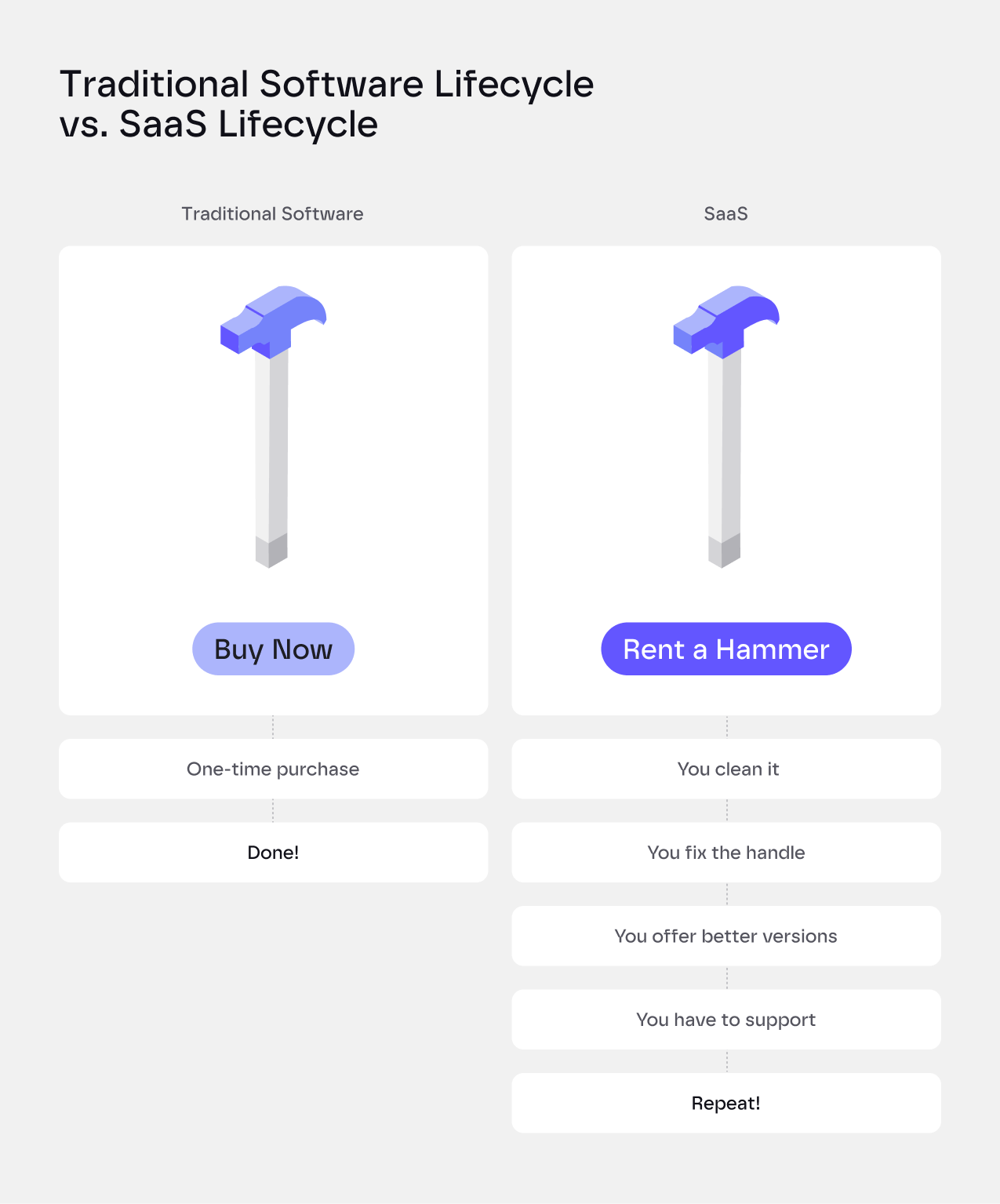
When you build traditional software, you're selling a hammer. Someone buys it once. They own it. They use it however they want. Your job is done.
When you build SaaS, you're running a hardware store. People don't buy the hammer. They rent it. Month after month. You have to keep the store clean. Stock the shelves. Help customers find what they need.
The business model changes everything about how you build the product.
Why the Subscription Model Changes Everything
Here's what Netflix figured out early. They weren't competing with Blockbuster on movie selection. They were solving a completely different problem.
Blockbuster sold movies. Netflix sold convenience.
That's the SaaS mindset. You're not selling features. You're solving ongoing problems.
Take Salesforce as another example. Before them, companies bought CRM software for $50,000. Installed it on their servers. Hired IT teams to maintain it.
Salesforce said: "What if you just paid us $100 per month per user? We'll handle everything else."
Game over for the old model.
This changes how you think about development. Every feature you build has to justify itself month after month. Not just on day one.
The Service Mindset vs Product Mindset
Traditional software teams think like this: "How do we build the best possible product?"
SaaS teams think like this: "How do we solve our customers' problems better every single month?"
It's the difference between a restaurant that serves great food once versus one that keeps you coming back.
The control plane versus application plane concept explains this perfectly. Your application is what users see and interact with. But the control plane is what makes the SaaS model work.
The control plane handles onboarding new customers. Managing user accounts. Collecting payments. Tracking how people use your product.
Most developers ignore the control plane. Then they wonder why their "great product" doesn't make money.
The Real Difference: It's About the Experience
Here's what most technical teams miss. SaaS isn't really about the architecture. It's about the customer experience.
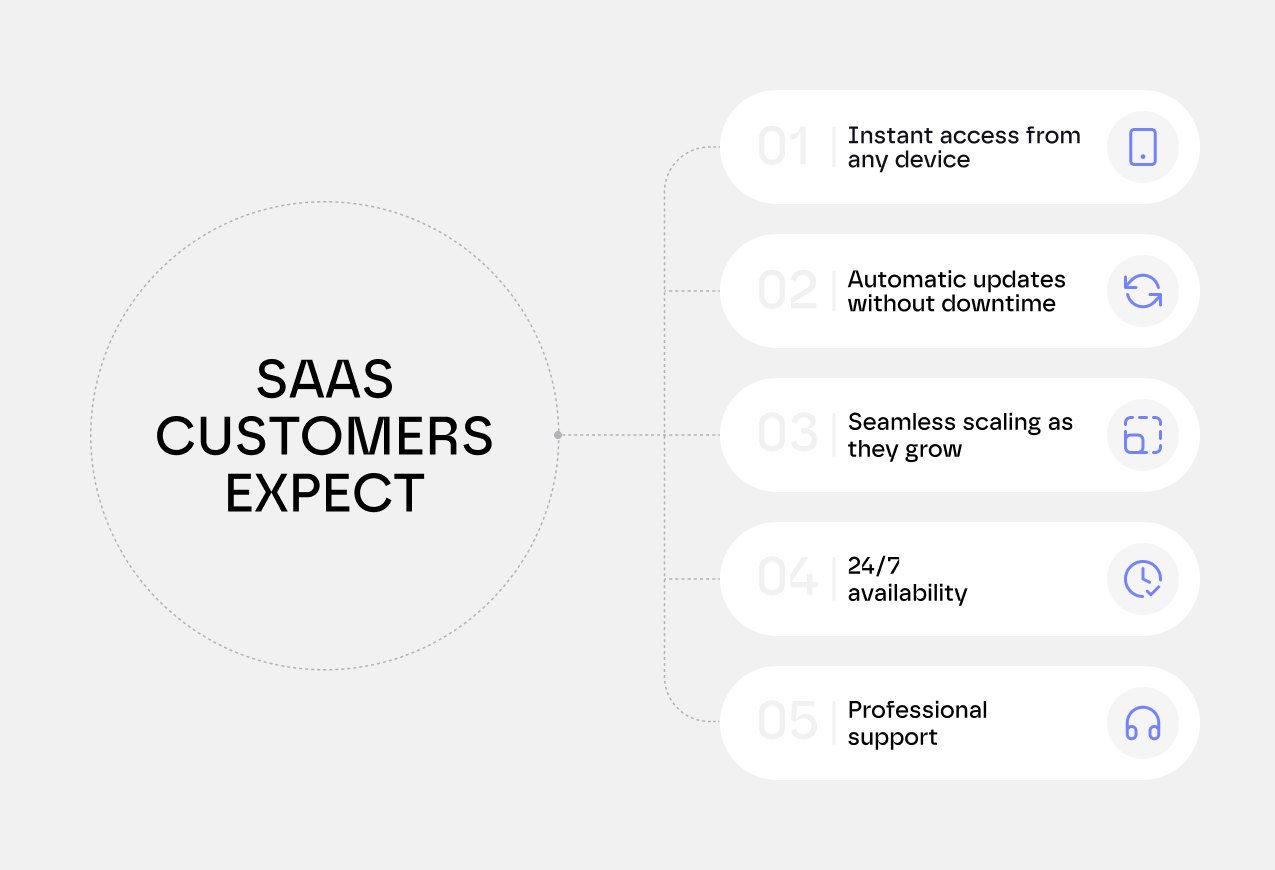
SaaS customers expect:
- Instant access from any device
- Automatic updates without downtime
- 24/7 availability
- Seamless scaling as they grow
- Professional support when things go wrong
Traditional software customers expect:
- A product that works when they install it
- Maybe some bug fixes over time
- To handle their own scaling and support
The experience expectations are completely different. And that shapes every technical decision you make.
From how you design your database to how you handle user authentication. Everything has to work for hundreds or thousands of customers at once.
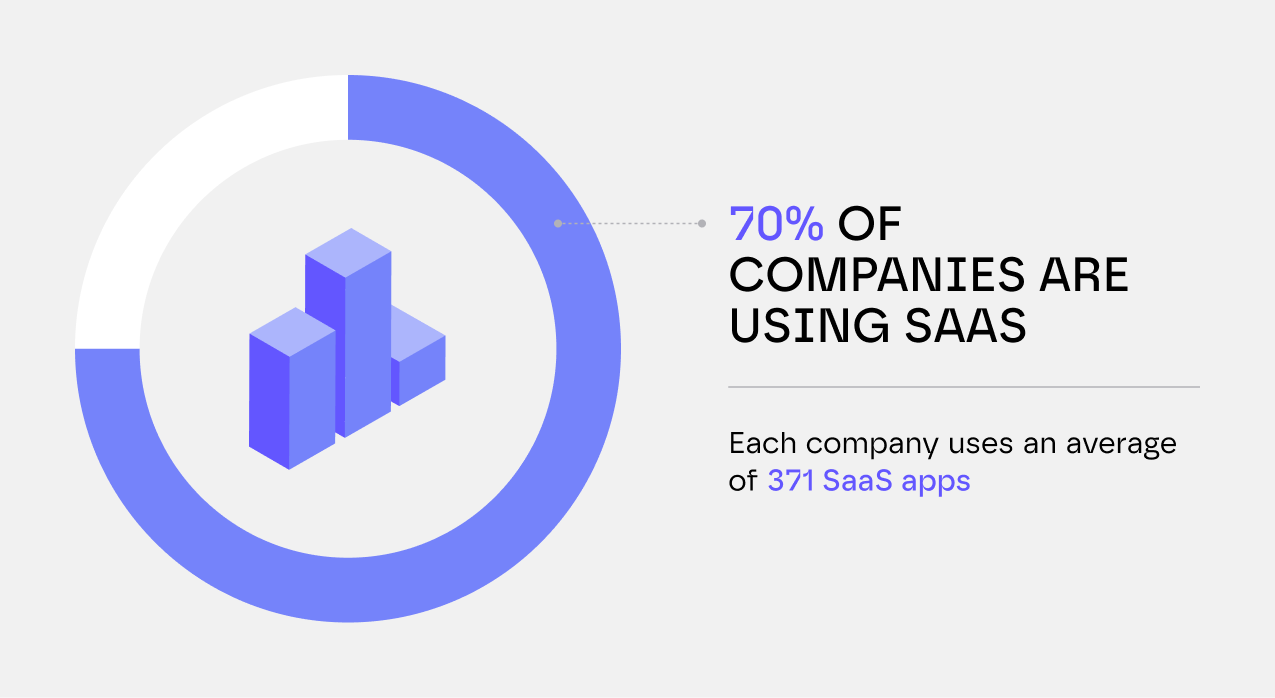
That's why 70% of companies now use an average of 371 SaaS applications. They're not buying software. They're buying solutions to ongoing problems.
Ready to see how this translates into actual technical decisions? Let's talk architecture.
Technical Architecture for Scalable SaaS Applications
Your architecture decisions today determine whether you scale to millions of users or crash at 10,000.
We noticed that apps fail not because developers can't code, but because they make the wrong choices on day one. You can't fix a foundation after you've built the house on top of it.
So let's get the foundation right.
Cloud Platform: Don't Overthink This One
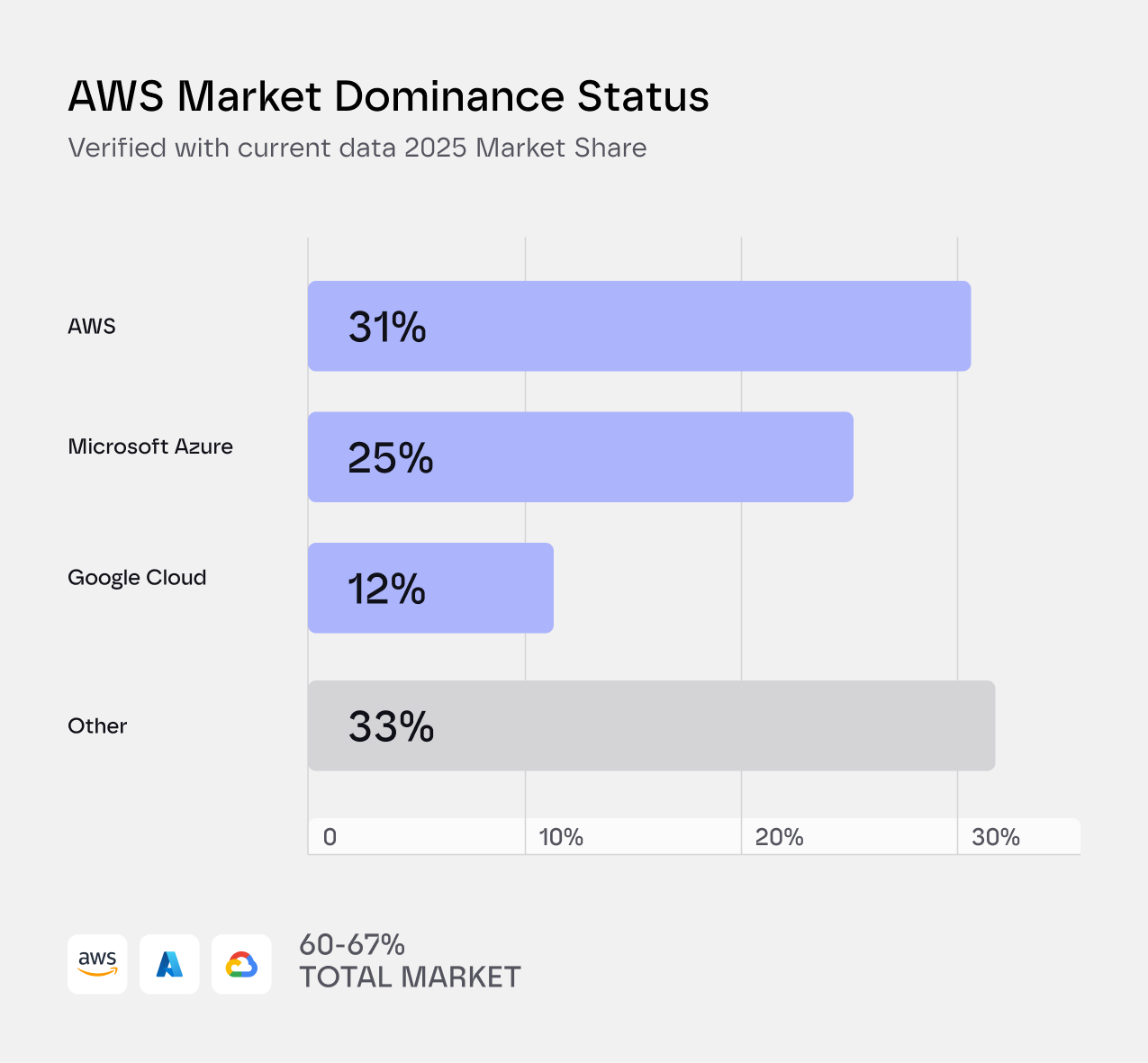
AWS wins for most SaaS projects. Not because it's perfect, but because it's everywhere.
Your developers already know it. Your customers trust it. When you need help at 2 am, you'll find answers on Stack Overflow. When you want to hire someone, they'll have AWS experience.
Sure, Azure makes sense if you're deep in the Microsoft world. Google Cloud is great for AI-heavy apps. But honestly? Unless you have a specific reason to go elsewhere, just pick AWS and move on.
You'll waste more time comparing clouds than you'll save from picking the "perfect" one.
Database Design: The Decision That Changes Everything
This choice shapes your entire business model.
Multi-tenant architecture can cut your infrastructure costs by 30-70%. The exact savings depend on your customers and how they use your app.
Here's the catch: enterprise customers often need their own private setup for security reasons. So your actual savings will vary. But for most SaaS companies, sharing infrastructure across customers makes a huge difference in profitability.
You've got three ways to do this:
One big shared database. Everyone's data lives in the same tables, separated by a customer ID field. Cheapest option, but you need to be super careful about keeping data separate.
Shared database, separate areas. Each customer gets their own section of the database. Good middle ground between cost and security.
Everyone gets their own database. Maximum security and flexibility. Also maximum cost - about 3-5x more expensive.
Start with option one or two. You can always move enterprise customers to option three later when they're paying enough to justify the cost.
PostgreSQL handles most multi-tenant patterns well and keeps costs reasonable.
That said, pick what fits your data. If you're storing lots of documents, MongoDB might work better. If your team already knows MySQL, stick with that. The best database is the one your team can actually work with.
Technology Stack: Pick What You Know
There are various technologies when it comes to SaaS application development.
But the best technology stack is the one your team can actually build with.
React dominates the frontend because everyone knows it. Tons of components available. Easy to hire for.
Vue and Angular work fine too, but React's ecosystem is just bigger.
For the backend, match your team's skills:
Node.js if you want to move fast and your team knows JavaScript already.
Python if you're doing anything with data or AI. The libraries are incredible.
Java if you're building for big enterprises who want something rock-solid.
Dropbox built its empire on Python. Slack runs on PHP. The stack matters way less than executing well.
API Design: Keep It Simple
REST APIs are boring. They're also proven.
Everyone knows how to use them. Every programming language can talk to them. GraphQL can be worth it if you're building mobile apps or have complex data needs. But if your team doesn't know GraphQL well, just stick with REST.
Don't solve problems you don't have yet.
The tricky part with SaaS is keeping customer data separate. Never trust what the client tells you about which customer they are. Always double-check on your server.
Some teams put the customer ID in the URL: /api/customers/acme-corp/orders. Others use subdomains: acme-corp.yourapp.com. Both work fine.
Just make sure you're checking permissions on every single request.
{{another-article-component}}
Scaling: Start Simple, Grow Smart
Design for horizontal scaling, but don't build it all on day one.
Start with a foundation that can grow. Keep your app stateless. Store data separately from your servers. But don't build complex distributed systems until you actually need them.
Instagram started on a single server. They scaled up as they grew. You can too.
Load balancers spread traffic across your servers. Auto-scaling adds more servers when you get busy. These are table stakes for SaaS.
Your database will be the first bottleneck. When that happens, you have options:
Add read-only copies for reports and analytics. Use connection pooling so you don't run out of database connections. Cache frequently-accessed data in Redis.
Eventually, you might need to split your database across multiple servers. But that's a good problem to have - it means you're successful.
Security: Not Optional
Multi-factor authentication should be built in, not bolted on later. Enterprise customers expect it.
Single sign-on integration will be required for any serious B2B sales. Plan for it early.
Encrypt everything. Data moving between servers. Data sitting in your database. Even data in your backups.
Keep detailed logs of who did what when. You'll need these for compliance audits and security investigations.
Here's what most teams miss: Compliance isn't just about security. It's about sales.
SOC 2 reports are required for most enterprise deals. GDPR affects anyone with European customers. Some industries have special rules - healthcare needs HIPAA, and payments need PCI compliance.
Plan for this stuff early. It's much easier to build it right than to retrofit it when a big customer asks for your compliance documentation.
The foundation you build today determines whether you can scale tomorrow. Choose proven technologies. Design for multiple customers from the start. Plan to add more servers as you grow.
Perfect architecture is less important than shipped architecture that works.
SaaS Application Development: Step-by-Step Process
Building SaaS isn't just about writing code. It's about creating a business that actually makes money.
Most developers get this backwards. They build first, then hope customers show up. Here's how to avoid that mistake.
Phase 1: Validation and Planning
We suggest talking to people before building saas applications.
I know, I know. You want to start building. Your idea is brilliant. Everyone will love it. But here's the reality - 63% of startups fail because they build stuff nobody wants.
Schedule coffee chats with 15-20 people who might use your product. Don't pitch them your idea. Just ask about their problems. What frustrates them about their current tools? Where do they waste time? What would make their job easier?
These conversations will shape everything. Your features, your pricing, even your marketing messages.
There’s a proven validation methodology to test assumptions and feature value with real users.
In fact, we’ve used the exact method and helped various startups raise over $14 million.
For example, one of our clients was Alcove Technologies. They are the first procurement management application specifically created for the needs of Interior Design professionals.
With fast design iterations, we’ve validated the idea and completed the MVP. As a result, the team secured $2.5 million in pre-seed funding from Menlo Labs.
Click to learn how we can help you, too.
While you're talking to people, check out your competition. Not to copy them, but to understand what's already out there. Read their customer reviews - especially the negative ones. Those complaints are your roadmap to building something better.
Now here's the hard part: pick one problem to solve. Just one.
Your MVP should do one thing really well, not five things poorly. If you're building project management software, maybe start with task creation and assignment. That's it. No reporting dashboard. No time tracking. No Slack integration.
Too many teams try to build everything at once. They end up with a confusing mess that solves nothing particularly well.
Less is more.
Phase 2: Build and Deploy
Work in two-week sprints. SaaS customers expect regular improvements, and short cycles keep you responsive to what they actually need.
Here's something most teams get wrong: they treat deployment like an event. Big releases every few months with lots of fanfare and stress.
Don't do that.
Set up automated deployment on day one. When a developer pushes code, it should automatically test itself and go live. This sounds scary, but it's actually safer than manual deployments. Humans make mistakes under pressure. Computers follow the same process every time.
Test with multiple fake customers, not just one user account. You need to know what happens when Customer A has 10 users while Customer B has 1,000. Will your app slow down? Will data leak between customers? Find out now, not during your first big sales demo.
Build security checks into every sprint. Don't save it for later. Test for the basic vulnerabilities that kill SaaS companies: SQL injection, broken authentication, and data exposure. Your customers trust you with their information. Don't blow it.
When you're ready to deploy, you have two good options. Blue-green deployment means you have two identical environments and switch between them. If something breaks, you can switch back instantly. Canary deployment means you roll out changes to a small group first, then expand gradually.
As you grow, watch three things closely:
Is your app fast and reliable? Track response times and error rates. Catch problems before customers complain.
Is your business healthy? Monitor monthly revenue and how many customers cancel. These numbers tell you if you're building something sustainable.
How do people actually use your product? This data drives your next features and shows you what's not working.
One last thing: plan for global customers from the start. Different time zones, currencies, and languages. It's much easier to build this stuff correctly than to retrofit it later when you want to expand.
Building SaaS is an ongoing conversation with your customers. You ship something. They use it. You learn from their behavior. Then you improve and ship again.
That cycle never stops. And that's exactly what makes SaaS businesses so powerful when you get it right.
Common Pitfalls and How to Avoid Them
Building a SaaS application is like navigating a minefield. One wrong step can blow up months of work. Let's look at the biggest traps that catch even experienced developers.
Building for Netflix when you're still at zero users.
This is the classic mistake. Developers spend months creating elaborate systems for millions of users. Meanwhile, they have no users at all.
Reddit's founders made this exact error. They built complex caching systems before anyone was using their site. Users were frustrated with basic features that didn't work. The lesson? Start simple.
Making freemium too generous.
Freemium can work. Slack and Dropbox prove it. The typical conversion rate of freemium users is 2-5% depending on the industry.
The trick is making free useful but limited. Slack limits old messages. Dropbox limits storage. Users hit these limits as they get more value.
Many SaaS companies give away too much for free. If users can do their job with the free version, they'll never upgrade. Make free users want more.
In this case study, you’ll see how we increased the conversion rate of a gen AI app by 47%.
Adding every feature customers ask for.
This one's tempting. Customers request features. You build them. Everyone's happy, right?
No. You end up with bloated software nobody understands.
Basecamp said no to most feature requests. They kept their project management tool simple. Result? A billion-dollar business.
Instagram started with tons of features. It only succeeded after they removed everything except photo sharing. Less is often more.
As you can see, many SaaS failures aren't technical. They're business mistakes disguised as technical problems.
The good news? You can avoid all of these. Know the traps. Plan around them. Your SaaS will have a much better chance of success.
The Business Side of SaaS Development
Code is only half the battle. The other half? Making money from it.
Here's how to get the business side right.
Pricing Strategy and Revenue Models
Pricing makes or breaks your SaaS.
Get it wrong and you'll struggle forever. Get it right and customers will line up to pay you.
Tiered pricing works for most SaaS companies.
Offer 3 plans: Basic, Pro, and Enterprise. Not 2, not 5. Three.
Why? Two plans make customers choose between "cheap" and "expensive." Five plans overwhelm them. Three plans create a clear upgrade path.
Make your middle plan the obvious choice. Price it 2-3x higher than Basic. Add features that power users actually want. Most customers will pick this one.
Slack does this perfectly. Their Basic plan is free but limited. The standard plan removes limits. Plus plan adds advanced features. Simple.
Value-based pricing beats cost-based pricing every time.
Don't price based on your costs. Price based on customer value.
If your CRM helps a salesperson close $50,000 more deals per year, you can charge $500 per month. That's a 10x return for them.
Talk to customers. Ask how much money your tool saves them. Or how much more they make with it. Then charge a fraction of that value.
Track the magic ratio: LTV to CAC.
Customer Lifetime Value divided by Customer Acquisition Cost. This ratio tells you if your business will survive.
Aim for 3:1 as your target. Spend $100 to get a customer worth $300.
Early-stage companies often start at 2:1 while they figure things out. That's fine. Consumer apps with viral growth can work with lower ratios. Enterprise sales with long cycles need higher ones.
Make sure your unit economics actually work for your business.
According to McKinsey & Company, top-quartile SaaS companies achieve >5:1 ratios.
Calculate LTV carefully. Include expansion revenue from upgrades. Subtract churn from customers who cancel. Be realistic about how long customers stick around.
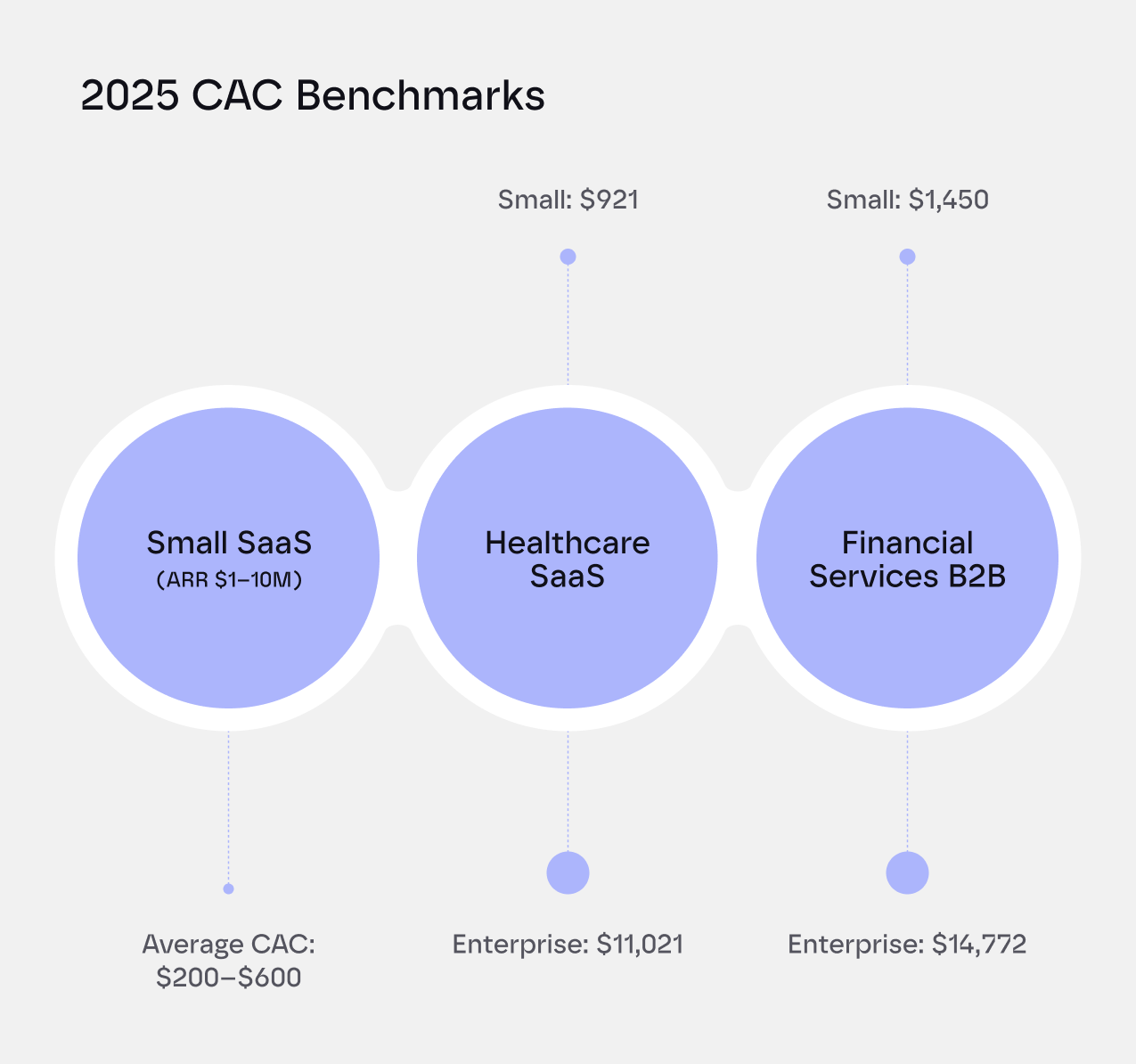
Customer Acquisition and Retention
Product-led growth is taking over.
Forget sales teams calling random prospects. Let your product sell itself.
Give users immediate value. Dropbox shows your files syncing instantly. Slack sends your first message in seconds. No lengthy onboarding required.
Make sign-up frictionless. Email and password, that's it. Don't ask for company size, phone numbers, or credit cards upfront. You can get that later.
Build viral loops into your product. When someone shares a Figma design, recipients need Figma to view it. Boom, new user. When someone invites you to Slack, you join their workspace. Another user acquired.
Customer success is a development requirement, not just a support function.
Your code should help customers succeed. Not just work correctly.
Build success triggers into your app. When users hit key milestones, celebrate with them. Show progress bars. Send congratulations emails. Make success visible.
Track leading indicators of success. Which actions predict long-term retention? Maybe it's inviting team members. Or connecting an integration. Or completing their profile.
Design your onboarding to drive these actions. Don't just show features. Guide users to their first success moment.
Churn is your silent killer.
A 5% monthly churn rate sounds small. But it means half your customers leave every year. You're running on a treadmill.
Reduce churn by understanding why people leave. Send exit surveys. Analyze usage patterns of customers who cancelled. Look for warning signs.
Common churn reasons: Poor onboarding, missing features, better alternatives, budget cuts, team changes.
Fix the fixable ones. Improve onboarding. Build requested features. Make switching costs higher through integrations and data lock-in.
Future-Proofing Your SaaS Application
SaaS application development means thinking ahead. The tech world moves fast, and what works today might not work tomorrow. Here's how to keep your app relevant as things change.
What's Coming Next in SaaS
AI is everywhere now. Most SaaS companies are either using AI or planning to add it soon. But don't just slap a chatbot on your app and call it done. The smart move is making AI part of what your app actually does. Use it to predict what customers need, automate boring tasks, or help users get better results.
Industry-specific apps are winning. Instead of building for everyone, successful companies pick one industry and go deep. A SaaS app built just for dentists will beat a generic business app every time. These specialized tools can charge more because they solve real problems that general apps can't handle.
Apps work together now. Users don't want one giant app that does everything poorly. They want tools that connect easily. Your project app doesn't need accounting features if it talks to QuickBooks smoothly.
Conclusion and Next Steps
SaaS app development isn't just about coding. You need to think like a business owner, too.
The biggest lesson? Keep it simple, but do it right. Pick one problem and solve it well. Don't try to build everything at once. Get the basics right first - security, user management, and solid infrastructure. These are much harder to fix later when customers are using your app.
Here's what matters most: make sure people actually want what you're building before you build it. Pick technology that can handle growth. Price your app based on what it's worth to customers, not what it costs you to make. And always listen to what users tell you.
Most SaaS apps fail because people build what they think users want instead of what users actually need.
Building SaaS is tricky, especially if it's your first time. There's a lot that can go wrong. If you're unsure about something, our team is here to help.
We’ve already helped over 60 SaaS companies with UX design and development.
They successfully validated the idea, fundraised, and established a large, loyal customer base.
There was a case when our clients’ app was acquired by an enterprise. It’s an Australia-based open-source workflow firm called Direktiv, recently acquired by ArchTIS.
Don’t hesitate to contact us and tell us your problems.
Book a no-obligation discovery call now.
=cta-glass=


.webp)
.webp)
.webp)