



Is your finance team out of breath lately?
Maybe that's less about their skills, and more about them being short on time.
Every week, finance professionals spend hours doing grunt work:
- Approving invoices
- Reconciling payments
- Reviewing transactions
- Preparing reports
- Checking compliance documentation.
None of that creates competitive advantage.
It's simply work that has to get done.
Here’s what everything should hinge on:
Should your team still be doing it manually?
Or should your software?
That is where fintech automation changes the conversation.
Don’t worry, we’re not talking about replacing your finance team.
Fintech automation basically removes repetitive work.
Once that goes away, teams can focus on analysis, decision-making, and business growth instead.
In this guide, we'll look at the financial processes you should automate first.
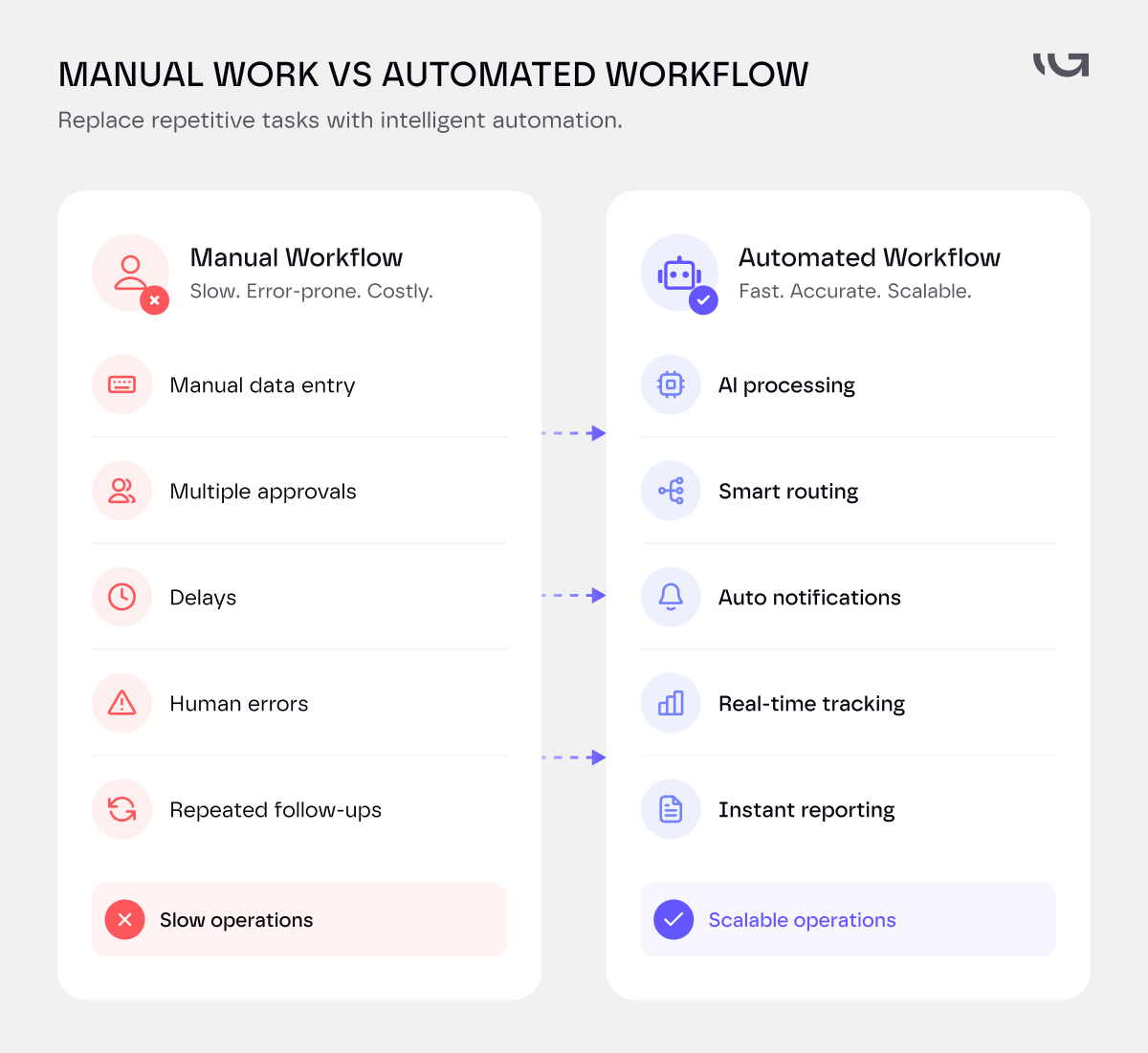
We’ll also talk about how financial process automation reduces operational friction, and where AI automation for finance can move the needle..
What Is FinTech Automation?
Fintech automation is the use of software, AI, APIs, and workflow automation to reduce manual effort.
Unlike traditional automation, fintech automation connects entire financial workflows instead of individual ones.
That can include:
- Invoice processing
- Payment approvals
- Fraud detection
- Reconciliation
- Compliance checks
- Financial reporting
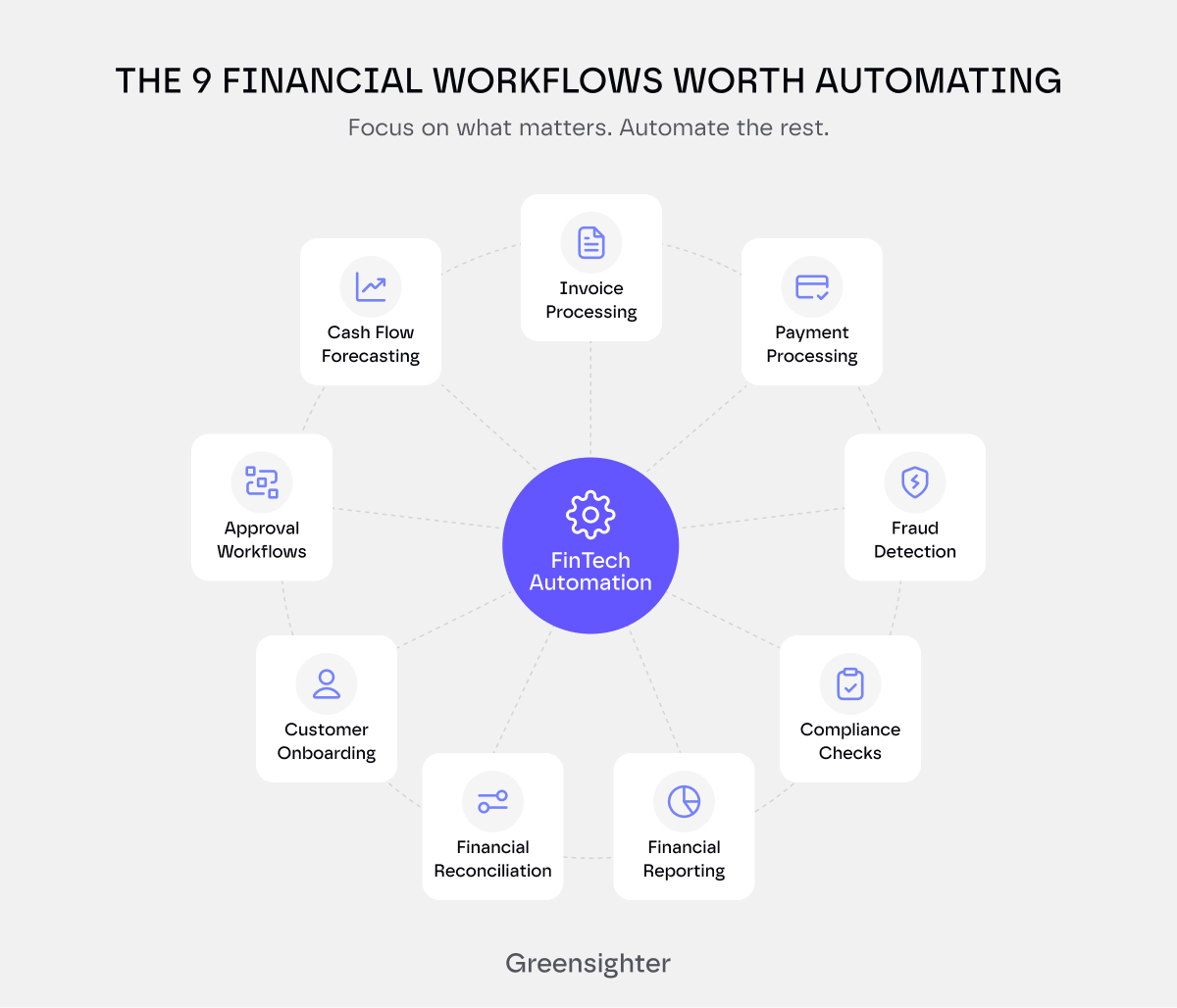
You’re not just trying to save time.
Automation creates faster, more accurate, and more scalable financial operations.
As you grow, business process automation in finance becomes less of a competitive advantage and more of a business necessity.
Manual processes rarely scale.
Automation does.
1. Invoice Processing
Invoice processing is an easy ground zero for automation.
Many finance teams still pour time into:
- Entering invoice data
- Routing approvals
- Matching purchase orders
- Tracking payment status
These repetitive tasks create unnecessary delays and increase the likelihood of human error.
Modern financial process automation tools do the hard work.
The result?
Faster approvals.
Fewer mistakes.
More time for work that actually requires human expertise.
=cta=
2. Payment Processing
On the surface, payments boil down to sending money.
But, finance teams often juggle:
- Recurring payments
- Supplier payments
- Payment approvals
- Settlement tracking
- Payment notifications
Delays just come with the package when these processes rely on manual intervention.
With automation, you get to:
- Standardize payment workflows
- Cut down on administrative effort
- Improve visibility
Last but not least, you give teams a clearer picture of payment status across the business.
You need this consistency as your organization growths.
3. Fraud Detection
We’ve always relied on predefined rules for fraud prevention.
Today, AI automation for finance allows you to identify unusual activity much earlier.
Instead of an “after the fact” approach, intelligent systems monitor activity in real time and flag anomalies as they occur.
Examples include:
- Unusual transaction values
- Abnormal spending patterns
- Suspicious login activity
- Unexpected payment destinations
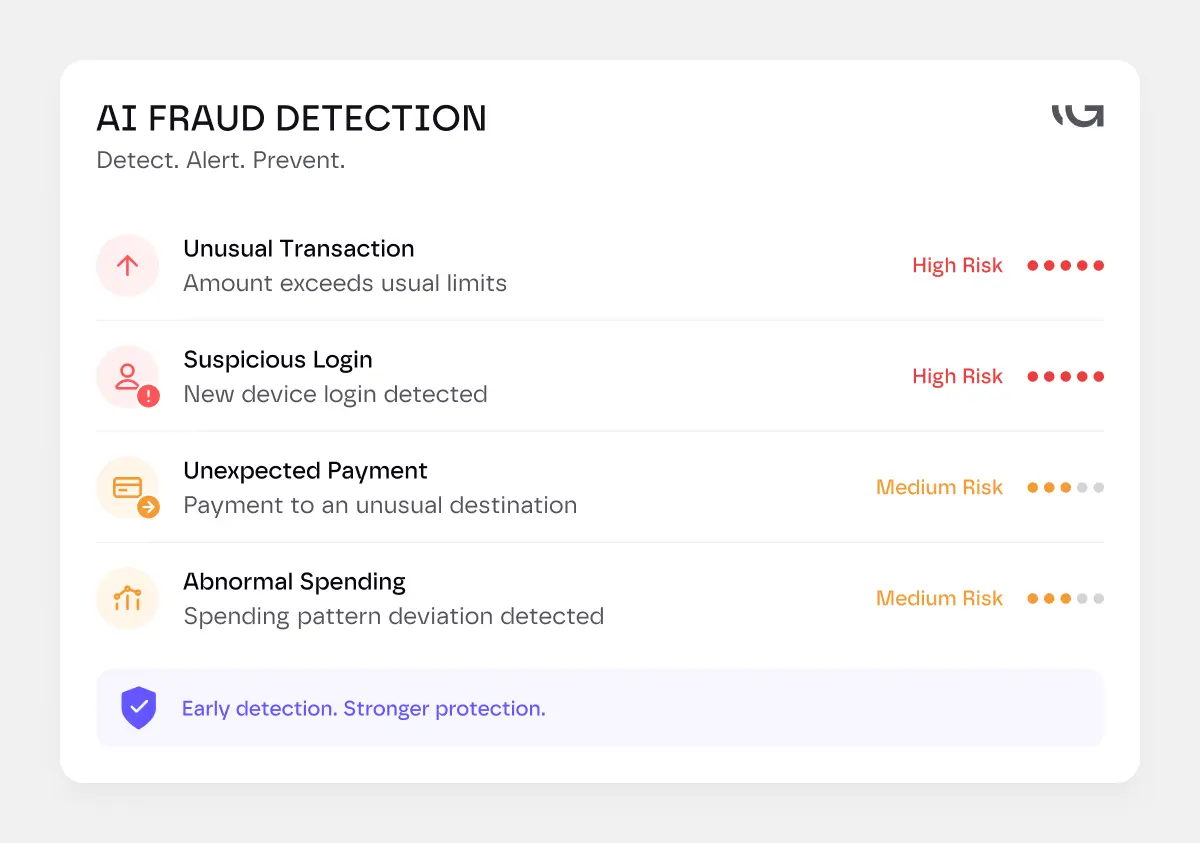
With automation, you close the floodgate to larger financial problems with early detection.
The best defense is a good offense.
4. Compliance Workflows
Ask any finance team, and they’ll tell you that compliance is a drain on time.
Whether the focus is KYC, AML, or internal financial controls, manual compliance processes quickly become burdens.
Automation can streamline tasks such as:
- Document collection
- Identity verification
- Approval workflows
- Compliance monitoring
- Audit preparation
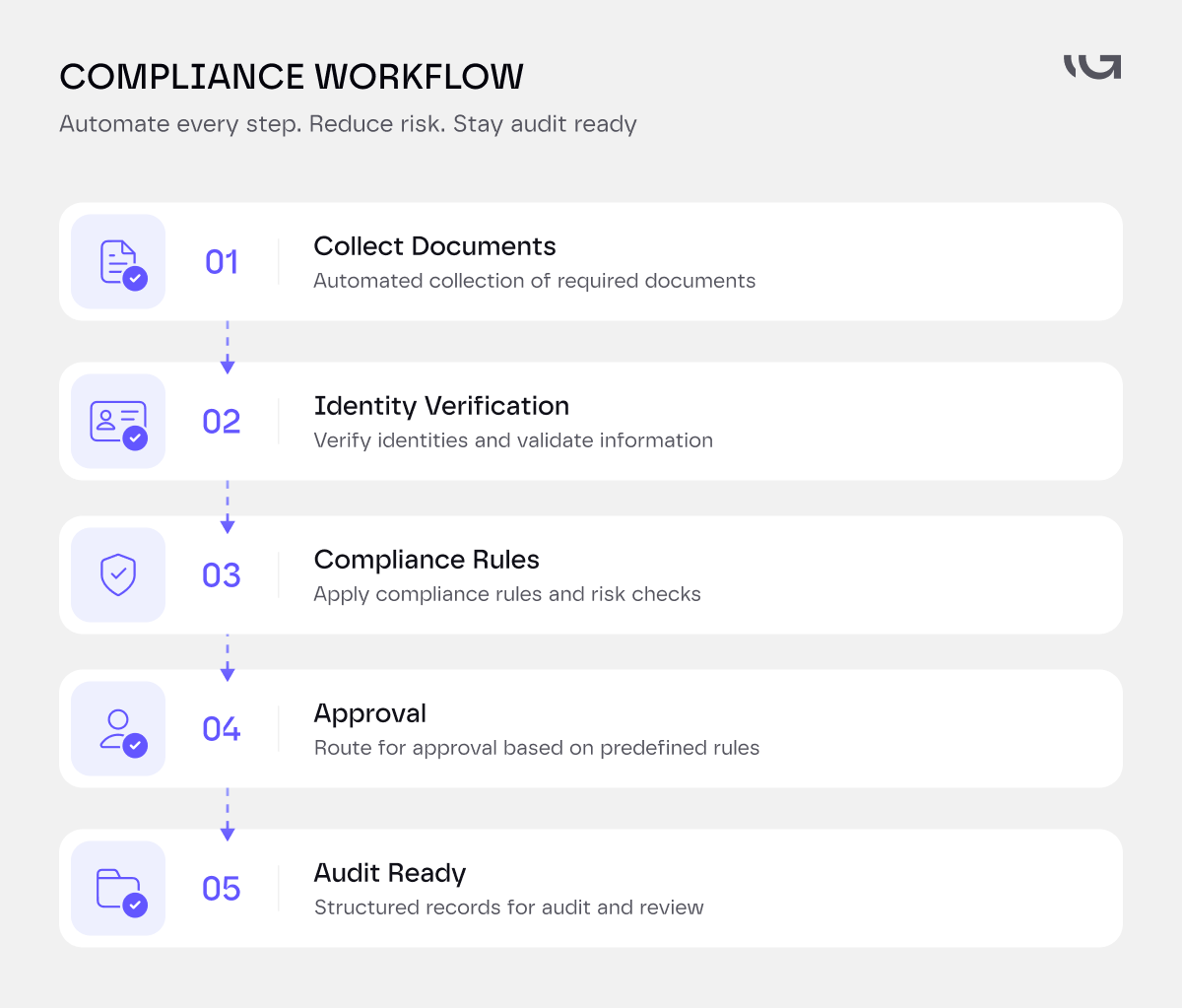
Instead of chasing paperwork across multiple systems, finance teams gain structured workflows with better visibility and traceability.
That reduces operational risk while improving efficiency.
5. Reporting and Financial Reconciliation
Does this sound like you? Are you spending days on:
- Collecting data.
- Comparing transactions.
- Reconciling accounts.
- Checking for discrepancies.
These activities are essential, but very mechanical in nature.
Modern fintech automation platforms can:
- Consolidate financial data
- Generate reports automatically
- Identify inconsistencies
These could take hours, if not days, of manual work.
The same applies to reconciliation.
Matching bank records, payment transactions, invoices, and settlements isn’t a cakewalk.
Especially if transaction volumes are growing.
Automated reconciliation lightens the load while reducing costly errors.
Tell your team they don’t have to waste time stockpiling information.
They can now use it to understand what the numbers actually mean.
6. Customer Onboarding and Identity Verification
First impressions are important even in financial interactions.
They determine how much your customers can trust you. .
Unfortunately, onboarding is still one of the most manual processes in many organizations.
Teams get bugged down in:
- Reviewing identity documents
- Verifying customer information
- Approving new accounts
- Requesting missing documentation
With fintech automation, much of this work can happen automatically.
Customers get approved faster.
Finance teams spend less time chasing paperwork.
7. Approval Workflows
Financial approvals often become bottlenecks.
Expense requests wait for managers.
Purchase orders sit in inboxes.
Invoices bounce between departments.
These delays happen less because people are unavailable.
They happen more because there’s no structured process.
With automation, you introduce clear approval paths based on predefined rules.
Instead of manually following up on every request, stakeholders get automatic notifications, reminders, and escalation prompts.
The result is faster decision-making without sacrificing control.
8. Cash Flow Forecasting
Most businesses rely on historical reports to understand financial performance.
But historical data only tells part of the story.
Modern AI automation for finance helps forecast future cash flow.
How? It analyzes transaction history, recurring payments, seasonal trends, and spending patterns.
This allows finance teams to identify potential cash shortages, revenue fluctuations, or unusual trends from the get go.
With proactive forecasting come better decisions.
9. Financial Reporting for Decision-Makers
Preparing reports is only half the job.
The other half is turning data into decisions.
Executives need real-time visibility into financial performance without waiting for monthly spreadsheets.
Automation makes this possible through live dashboards, automated KPI reporting, and scheduled executive summaries.
Instead of spending days preparing reports, finance teams can allocate more time interpreting them.
That shift creates far greater business value than reporting alone.
Fintech Automation Doesn't Replace People
Let’s do some mythbusting:
Fintech automation doesn’t replace the human factor.
Or, at the very least, it shouldn’t.
It’s here to remove repetitive work.
The following responsibilities still belong to people:
- Approving strategic investments.
- Investigating unusual transactions.
- Managing customer relationships.
- Making financial decisions.
Automation simply gives finance professionals more time to focus on them.
The goal is not fewer people.
It’s fewer repetitive tasks.
The strongest finance teams combine human expertise with intelligent automation.
In fact, this is why there are now standards set in place for using AI and automation.
Common Automation Mistakes
Automation delivers the best results when it improves an already well-designed process.
If you have a poor workflow and you automate it, all you’re doing is making inefficient processes happen faster.
Here are some of the most common pitfalls in automation we see at Greensighter:
Automating Broken Processes
If a workflow is confusing today, automation will not fix it.
It will simply repeat the same problems more efficiently.
Review the process first.
Then automate it.
Trying to Automate Everything at Once
Not every financial process needs immediate automation.
Trying to transform every workflow simultaneously often creates complexity you don’t need.
Start with repetitive, high-volume processes.
Expand one step at a time..
Ignoring System Integrations
Automation only works when systems communicate effectively.
Disconnected accounting platforms, payment providers, and CRM systems create more manual work instead of less.
Integration planning should happen before implementation.
It’s not an afterthought.
Removing Human Oversight Completely
Automation should support human decision-making.
High-risk financial activities still require human review.
The best automation strategies know when people should remain involved.
Focusing on Short-Term Savings
Don’t evaluate automation based solely on immediate cost reductions.
The bigger value often comes later.
Faster operations.
Better reporting.
Fewer errors.
Improved scalability.
Those long-term gains usually deliver the greatest return on investment.
Final Thoughts
The biggest perk fintech automation brings to the table is consistency.
Manual processes introduce delays.
They introduce errors.
They create unnecessary operational overhead.
Automation creates predictable workflows that scale alongside your business.
Whether you're automating invoices, payments, fraud detection, compliance, or reporting, the objective remains the same.
Give your finance team more time to focus on work that drives growth instead of repetitive administration.
=cta-black=
FAQ
What is fintech automation?
Fintech automation uses software, AI, and connected workflows, reducing manual work across financial operations.
It helps businesses improve efficiency, accuracy, and scalability while reducing repetitive administrative tasks.
Which financial processes should businesses automate first?
Most organizations begin with repetitive, high-volume tasks, including:
- Invoice processing
- Payment workflows
- Reconciliation
- Compliance checks
- Financial reporting
These processes usually deliver the fastest return on investment.
How does financial process automation reduce costs?
Automation reduces manual effort, minimizes human error, shortens processing times, and improves operational efficiency.
Over time, these improvements help lower operating costs while allowing finance teams to focus on higher-value work.
Is AI automation for finance secure?
Yes, as long as you implement it with appropriate security controls and human oversight.
AI is typically used to support fraud detection, forecasting, anomaly detection, and workflow optimization.
We don’t recommend using it to make critical financial decisions independently.
What is the difference between fintech automation and business process automation in finance?
Business process automation in finance focuses on improving internal financial workflows.
Fintech automation is broader and often combines automation, APIs, AI, and financial technologies.
This is done to optimize both customer-facing and operational processes.
Can small businesses benefit from fintech automation?
Absolutely.
Small businesses often benefit the most.
That’s because automation reduces administrative workload without requiring larger finance teams.
Starting with a few repetitive workflows can create significant productivity gains as the business grows.