


TL;DR
Healthcare apps cost $30,000 to $500,000+. The gap isn't random. It reflects what you're building. But the build is only part of the cost. Maintenance, hosting, and compliance add up every year after launch. Most founders don't price that in. Often, the biggest budget mistakes happen before a single line of code is written. Read this before you talk to a vendor.
Search “how much does a healthcare app cost,” and you’ll get quotes ranging from $25,000 to over $1 million. Sometimes on the same page.
Both numbers are right.
"Healthcare app" is a broad term. It covers everything from a simple appointment reminder to an FDA-cleared diagnostic platform wired into hospital EHRs.
The price gap isn't random. It’s up to what you're actually building.
And if you don't know which category you're in before you talk to a vendor, you'll find out the hard way. Mid-project.
This guide breaks down where the money actually goes in 2026.
Get the big picture on the numbers you need to make a budget decision.
A decision you can defend in a board meeting. Or to an investor.
What Healthcare Apps Actually Cost in 2026
Let’s start with the numbers you actually came here for.
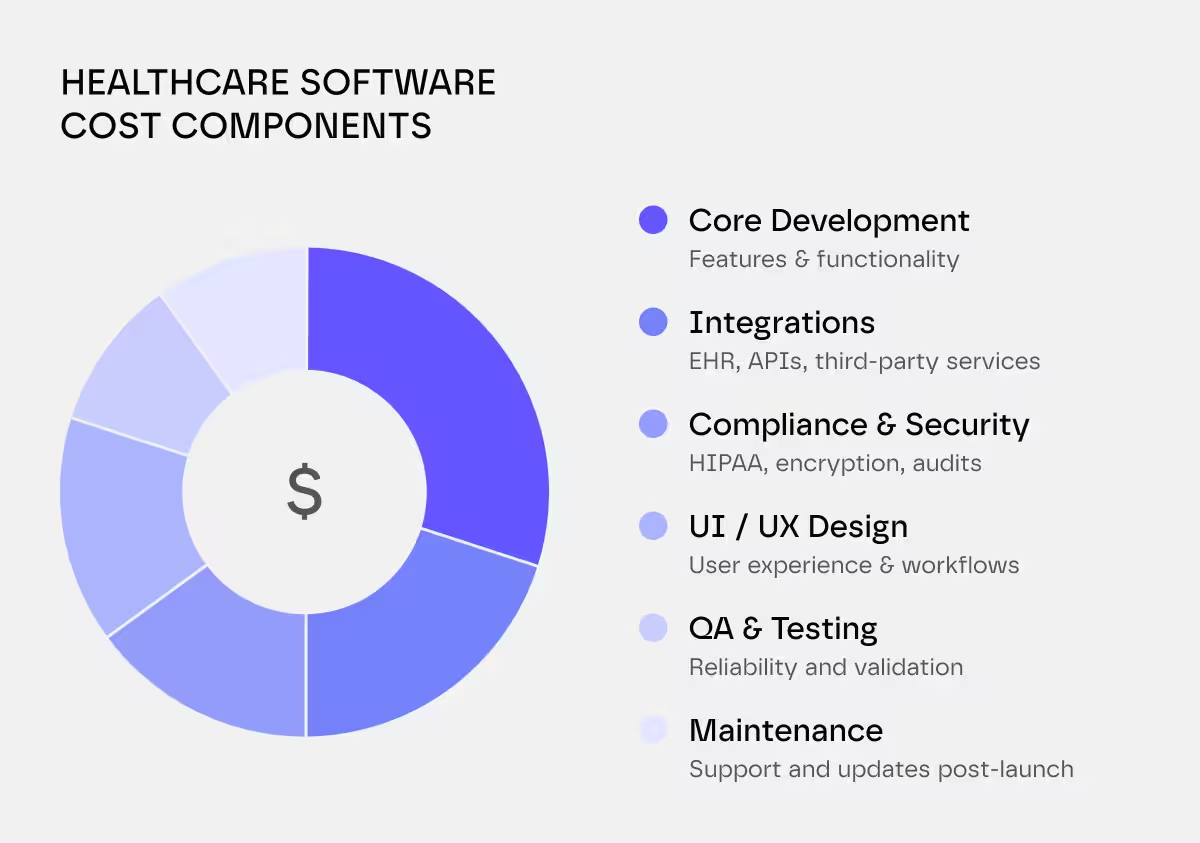
Across industry reports and published agency pricing, here’s what a competent team will quote a U.S. buyer this year:
- Basic MVP — roughly $30,000 to $80,000. Think appointment booking, a patient portal with messaging, or a simple symptom tracker. Narrow feature set. Limited integrations.
- Mid-complexity app — $80,000 to $150,000. Authentication, patient profiles, scheduling, secure messaging, basic analytics, and one light integration.
- Full-featured, compliance-heavy product — $150,000 to $300,000+. HIPAA-grade security, telemedicine video, payment processing, and one or two real EHR integrations.
- Enterprise-grade platforms — $300,000 to $500,000+. Add AI diagnostics, multi-hospital EHR integrations, or FDA-regulated functionality, and you’re often into seven figures.
- Telemedicine specifically — basic builds run $40,000 to $100,000; AI-enabled, multi-role platforms hit $150,000 to $300,000+.
Here’s a real example of how budgets blow up. A Series A healthcare startup budgeted $80,000 for an AI-powered patient engagement app. The final invoice: $310,000. Not because anyone was dishonest. HIPAA architecture, EHR integration, and AI training data costs were simply never discussed during scoping.
That’s the pattern. It’s not dishonesty. It’s a scoping conversation that never happened.
The mHealth market is growing fast too. It’s projected to climb from about $40.65 billion in 2026 to $88.70 billion by 2032. That growth is pulling in everyone from two-person freelance teams to enterprise consultancies. The same feature list gets priced very differently depending on who’s quoting you.
MVP vs. Full Product
One distinction matters more than any other: are you building an MVP or a full product?
An MVP isn’t a cheap version of your app. It’s a strategic decision to validate before you spend. Healthcare MVPs typically cost 40 to 60% less than a full build and launch in 3 to 4 months for a basic version, 6 to 9 months with EHR integration, and 12+ months for fully featured, multi-platform, AI-enabled systems.
MVP development pays for itself when it prevents you from building six months of features nobody wants.
It becomes dangerous when people treat “MVP” as “skip compliance.” More on that ahead.
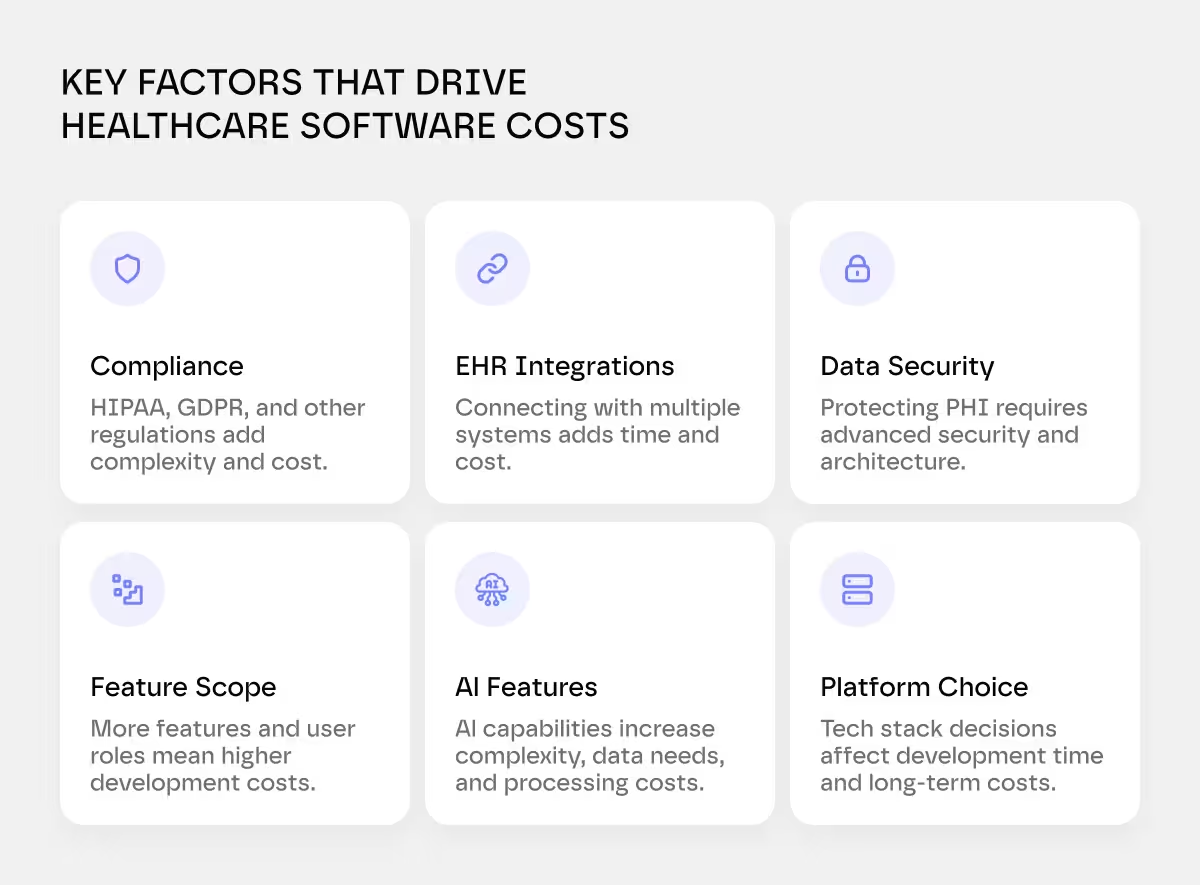
What Actually Drives the Number Up or Down
Two healthcare apps with identical pitches can be quoted 5x apart. Here's why.
1. Compliance Depth
This is the biggest variable most founders don't price in.
HIPAA built in from day one adds 20 to 30% to your total budget. Retrofitting it after launch costs 2 to 3x more. It's not a feature you add. It's an architectural decision you make before you write a single line of code.
If your app touches patient data in any form, this isn't negotiable.
Most healthcare app budgets don't fail at launch. They fail in the scoping call that happened too fast, with the wrong questions never asked.
=cta=
2. EHR Integration
A single integration with Epic, Cerner, or athenahealth is frequently the most expensive line item in the entire project.
Read-only FHIR integration: $15K to $30K. Full bidirectional integration: $50K to $80K. Timeline: 10 to 18 weeks — minimum. And that's assuming no delays from the EHR vendor's side, which is a generous assumption.
Founders almost always underprice this one. Don't.
3. Feature Scope
The wider you go on features, the faster costs compound.
Appointment scheduling alone might be a few thousand dollars. Add real-time availability, insurance verification, and two-way EHR sync, and that same "booking feature" becomes a $40K to $70K line item. Add video consultations on top, and you're looking at another $40K to $60K.
Every user role you add multiplies complexity. Every integration multiplies risk.
Everything Else…
Platform choice, team location, AI features, and design quality all move the number too. But they're levers you control.
The Costs agencies often miss in the Proposal
The biggest budget mistake isn't overspending on the build.
It's assuming the build is the budget.
Here's what most proposals quietly leave out.
Annual Maintenance
Healthcare apps don't maintain themselves. Plan for 15 to 30% of your original build cost every single year. On a $150,000 build, that's up to $30,000 annually — for compliance updates, OS changes, and ongoing testing. It doesn't stop. It doesn't get cheaper.
Are you based in EU?
If your app uses AI features and you're operating in the EU, budget for the AI Act. Healthcare apps fall under the high-risk classification. That means mandatory documentation, human oversight requirements, and continuous monitoring.
Annual compliance costs range from €10,000 to €100,000. Healthcare sits at the higher end.
That’s why healthcare MVP is more expensive than other industries.
Compliance Upkeep
HIPAA doesn't end at launch. Annual risk assessments, audit logs, policy updates, staff training, and BAA renewals. Budget $4,000 to $12,000 per year for smaller apps. Enterprise scale goes much higher.
And if you're selling into hospitals? Add SOC 2 Type II re-audits at $5,000 to $15,000 a year. Customers will expect it every renewal cycle.
Hosting
AWS, Azure, and Google Cloud all sign BAAs. None of them are HIPAA-compliant out of the box. How you configure them determines your compliance.
Realistic monthly infrastructure costs for a live production app: $5,000 to $25,000. It grows with your user base.
Third-Party Services
Video APIs, SMS notifications, and payment processing. Each one feels small at first. At scale, they add up fast. Price these before you launch, not after.
The Rule of Thumb
Plan to spend your initial build cost again within the first two to three years of operation.
If your budget doesn't account for that, you don't have a budget. You have a launch plan.
Here's why costs stay high. When HIPAA is wired into every layer of the codebase, touching anything triggers a compliance review. Change a button. Re-audit. Fix a bug. Re-audit. It adds up fast.
At Greensighter, we isolate PHI in a secure vault instead of spreading compliance logic across the entire app.
In this case, you get fast product release without dragging compliance into every review cycle. That one architectural decision can cut long-term maintenance costs by up to 40%.
Small detail at the planning stage. Big difference on your Year 3 invoice.
Contact us to clarify a product strategy for your use case.
Evaluating Development Partners: Offshore, Nearshore, or U.S.?
No single geography is the right answer. You’re always trading off three things: hourly rate, communication overhead, and healthcare domain expertise.
Here’s how each option actually plays out.
U.S. agencies typically charge $100 to $180+/hour. Larger firms run $250 to $350. Enterprise-class shops go $400+. If they’re healthcare-specialized, you get deep HIPAA and EHR experience, strong legal footing for BAAs, and the cultural and time-zone alignment that U.S. hospitals expect. You pay more. You also take on less risk.
Nearshore teams in Latin America — Mexico, Colombia, Brazil, Argentina, Chile — typically run $25 to $75/hour for mid-level to senior developers. The advantages are real. Time-zone overlap with the U.S. Cultural alignment. A growing number of teams with SOC 2, GDPR, and HIPAA experience. For U.S.-based founders who want real-time collaboration without U.S. agency prices, nearshore is often the best compromise.
Offshore teams in Eastern Europe run $25 to $90/hour. Asia runs $12 to $60/hour. You can cut your bill by 40 to 60%. But the risk surface is real. Larger time-zone gaps. Communication friction. Variable healthcare expertise. More complex BAA and data-residency structures. The teams charging the lowest rates are rarely HIPAA-native.
Red Flags to Watch For
Regardless of geography, these are the warning signs that should stop you cold.
No discovery phase. Any vendor willing to scope and fix-price your project from a 30-minute call is either lowballing to win the deal or hasn’t read your requirements. Competent healthcare teams insist on 1 to 4 weeks of paid discovery.
Demanding 75%+ upfront. Standard milestone structures run in 25 to 33% tranches. Anything over 50% at signing shifts all the risk onto you.
No healthcare case studies or references. If they can’t point to live HIPAA-compliant apps and let you speak to prior clients, their healthcare “experience” is marketing copy.
Vague answers on compliance. “We’ll handle HIPAA” is not an answer. You need specifics. Encryption standards. Audit log methodology. Access controls. Breach response process.
Won’t sign a BAA. Non-negotiable. If your vendor won’t sign one, they can’t legally touch PHI. Walk away.
Slow or sloppy communication during the sales process. If they miss meetings before you’ve paid them, they will miss them after.
How to Scope Before You Send an RFP
Before you contact a single vendor, write a one-page document that answers these questions.
Who are the users? Patients, clinicians, admins, caregivers? What workflows will the app live inside? What does success look like in measurable terms? What regulatory category are you in — HIPAA only, or also FDA? Which EHRs or third-party systems must you integrate with on day one?
That single page cuts proposal variance by roughly 50%. Every vendor bids on the same reality instead of their own assumptions.
Common Mistakes That Cause Budget Overruns
Roughly 70% of software projects exceed their initial budget. In healthcare, the pattern is predictable. And almost always avoidable.
Here’s where founders go wrong.
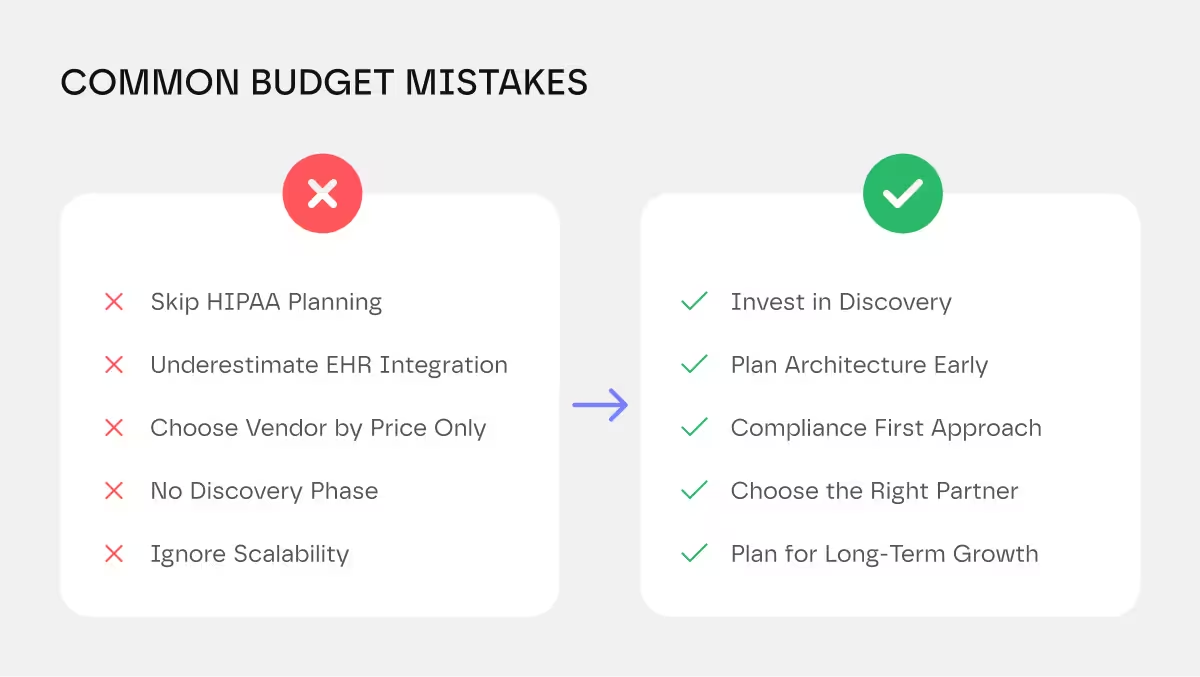
Scoping features before scoping compliance. This is the number one healthcare-specific budget killer. The regulatory layer — HIPAA, possibly FDA, state privacy laws — must define the architecture. Not get added on top of it later. Retrofitting compliance costs 2 to 3x the original investment.
Treating HIPAA as a post-launch task. Apps without HIPAA baked into the architecture can fail App Store review. They lose pilot deals with covered entities. They trigger expensive rebuilds. Even founders who swear their MVP “doesn’t have real PHI” frequently discover it does.
Under-scoping EHR integration. Founders budget for “EHR integration” expecting a single sprint. Then they find out Epic certification alone takes 6 to 12 weeks. Write-back is 3x harder than read-only. Multi-site hospitals often run different Epic versions. That means custom work for each one.
Trying to build a Swiss-Army app. Cramming appointment booking, telemedicine, symptom tracking, medication reminders, and billing into v1 produces a product that does nothing particularly well. Focus on one problem. Solve it completely.
Ignoring clinical workflows. Healthcare professionals won’t change established routines for your app. Nearly 80% of medical software projects fail partly because of friction with clinical workflow. Spend a day in a clinic before you build. It’s cheaper than any feature you’ll add later.
Skipping the discovery phase. Starting to code before you have a defined scope, user flows, compliance plan, and integration list is where 43% of budget overruns begin. The project’s complexity gets misjudged from day one. Every dollar of new development generates about $0.41 in technical debt.
Scope creep from clinical stakeholders. Physicians and nurses will request features during development. Some are essential. Many are nice-to-haves. Without someone with authority to say no, timelines derail.
Choosing the cheapest vendor. An offshore team at $25/hour looks attractive until you’re paying for rework, poor communication, and missed compliance requirements. The most expensive mistake is almost always hiring the cheapest team.
Forgetting post-launch costs. Many healthcare projects succeed at launch and quietly fail by month 14. Ongoing compliance, hosting, and maintenance weren’t in the plan. Budget as if launch is the starting line. Not the finish.
Underestimating procurement. Enterprise healthcare sales involve 200+ question security questionnaires, vendor risk assessments, legal review, and multi-quarter procurement cycles. Your sales timeline is often longer than your build timeline.
Before You Sign Anything
You don't need to become a software expert to make a good decision here.
But you do need to know what you're buying before you pay for it.
The founders who get this right aren't always the ones with the biggest budgets. They're the ones who locked in compliance architecture before pricing features.
Who understood what EHR integration actually costs in time, not just dollars.
Who treated launch as the starting line — not the finish.
The ones who got it wrong? They had the same ideas. They just signed too fast.
If you're still figuring out what you're actually building, that's exactly what a discovery phase is for.
It's the cheapest insurance in software development.
At Greensighter, that's where we start. Not with code. With clarity.
[Talk to us before you scope →]


.webp)
.webp)