




You have seen this before: a vendor's quote lands in your inbox. $118 per month. Clean. Affordable. You move forward.
Six months later, the actual bill arrives. It's three times higher.
This isn't unique to your clinic. Most practices have no accurate picture of their true EHR costs. And almost all of them exceed budget by 25% or more, sometimes far worse.
Why the gap? Because EHR pricing isn't one thing. It's a Rubik's Cube.
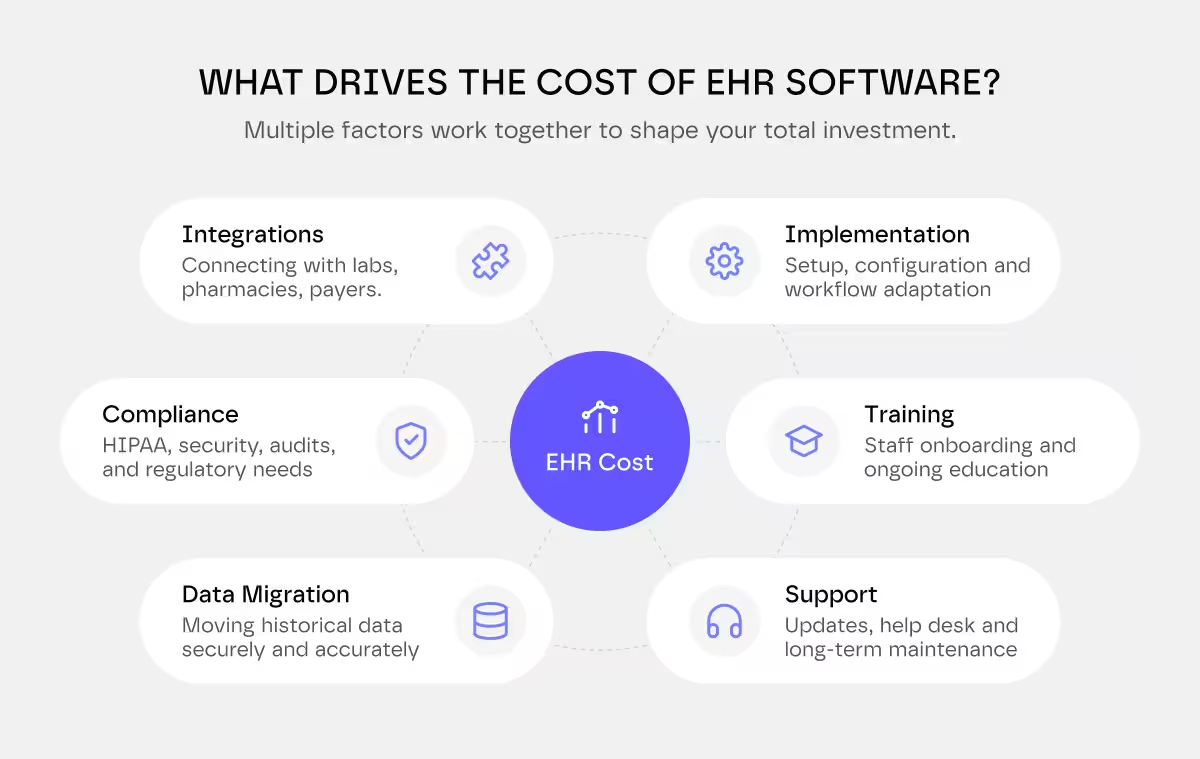
Clinic size, medical specialty, data migration quality, integration needs, feature set, each one tilts the price.
A 5-provider clinic might pay $30,000 annually or $150,000. Same team. Same size. Completely different math.
The vendors know this. They also know you won't ask the right questions. That's where most practices get blindsided.
But it doesn't have to be this way. The key is understanding the tier system.
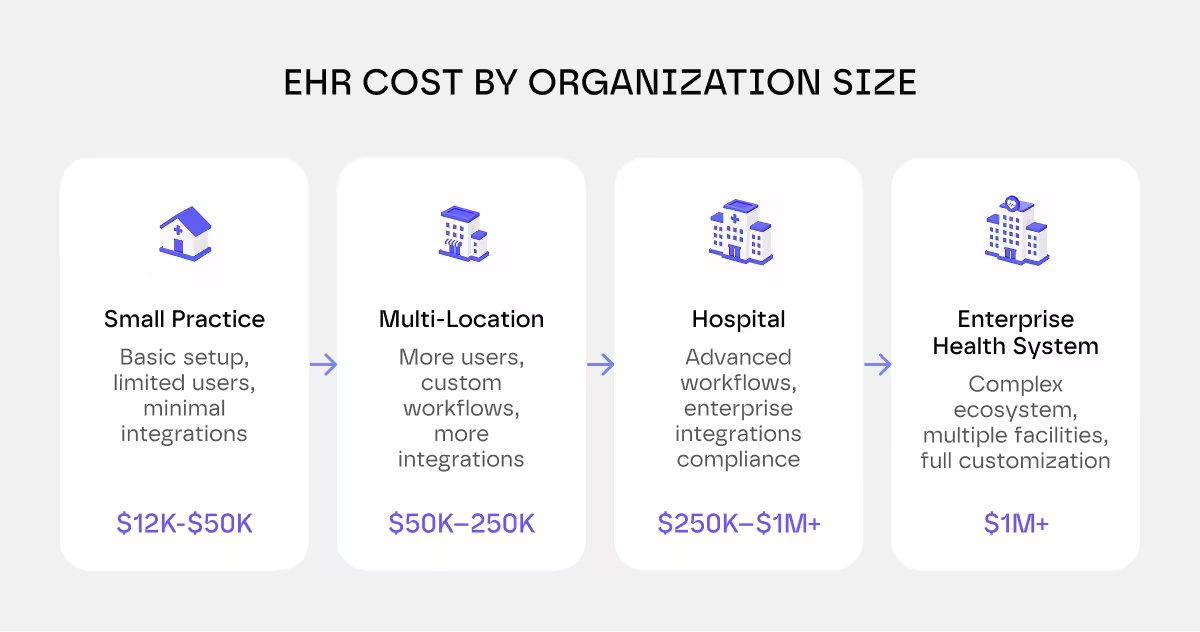
Quick comparison: Cost, payback & benefits by tier
Note: Vendor prices come from public pricing pages where vendors publish them. Where they don't, we say so and use third-party market estimates instead. Cost ranges reflect patterns reported across multiple sources, not one client's invoice. Case examples are labeled real or illustrative, so you understand it better.
Tier 1: Cloud SaaS EHRs ($118-400/month per provider)
Entry-level. Pre-built. Cloud-hosted.
You pay a subscription, the vendor manages the servers, and you go live in weeks instead of months.
Sounds too good to be true? Here's what vendors are actually charging in 2026:
- RXNT: $126/month per provider. This is RXNT's own published price for its EHR bundle.
- DrChrono: No public price. DrChrono is quote-only. Third-party estimates range from $199 to $599/month, depending on tier.
- eClinicalWorks: $449–$599/month per provider. This is a commonly cited market rate, not eClinicalWorks' own published page.
- Athenahealth: Not a flat fee. It's a base fee around $140/month per provider, plus 3–7% of your collections. That second part can cost more than the base.
- Meditech Cloud: No clear public per-provider price for small practices. Meditech is mostly priced for hospitals. Treat any per-provider number as a rough estimate.
The math for a typical 5-provider clinic looks like this. Budget $150-$250/month per provider. That adds up to $750-$1,250/month, or $9,000-$15,000 annually.
Tack on setup costs ($2,000-$10,000) and training ($1,000-$5,000). Your Year 1 total lands somewhere between $12,000 and $30,000.
The catch: these systems work beautifully if your workflows fit their template.
General practice? Family medicine? They work fine. The software was literally built for you.
Need specialty customization? You hit a wall fast. You'll be negotiating with support and paying for custom features. Or worse, retrofitting your clinic's processes to match the software instead of the other way around.
Tier 2: Mid-market customizable systems ($200-500/month + $50K-200K setup)
Growing practices. Specialty workflows. You need flexibility, and you're willing to pay for it.
These are cloud platforms that let you adjust templates, configure workflows, and layer in integrations. You get far more control than Tier 1, without paying enterprise prices. It's the Goldilocks zone for medium clinics.
Monthly cost: $200-$500 per provider.
Implementation: $20,000-$65,000 for small practices. $65,000-$200,000 for medium clinics (5-20 providers).
Here's the hidden cost most quotes leave out entirely.
Integrations. Your EHR needs to talk to billing, scheduling, patient portals, and labs. Each connection typically costs $3,000-$20,000. Five integrations, and you're spending $50,000-$100,000 on plumbing alone. Almost certainly more than you budgeted.
Data migration. Moving off a legacy system is messy. Old data is dirty: duplicate records, bad patient IDs, unstructured notes. The older your current system, the worse it gets. Budget $5,000-$50,000 depending on complexity.
Staff training and customization. Basic training runs $1,000-$5,000. Specialty templates and workflows add another $2,000-$10,000. This matters especially during modernization projects where older systems weren't built for interoperability in the first place.
Want to understand how this architecture actually works? Our guide to healthcare SaaS application development breaks down how scalable healthcare software is built.
Tier 3: Enterprise Systems (Epic, Cerner, Meditech) ($1M+)
These are not for most clinics.
Enterprise EHRs are built for hospital systems. Large health networks. Multi-specialty practices with hundreds of providers.
In 2026, the costs are:
- Epic: $500,000-$1,000,000 for mid-size practices. $2,000,000–$10,000,000+ for hospitals
- Cerner: $1,000,000+ for implementation
- Meditech: $200-$500/month per provider, plus major infrastructure costs
Why is it so expensive? It's not software. It's an infrastructure overhaul.
Twelve to twenty-four months. A dedicated implementation team. Change management consultants. Workflow redesign from the ground up.
You're not installing a tool. You're rebuilding how your entire organization works.
Integration complexity explodes here too. Fifty-plus systems talking to each other: radiology, pharmacy, lab, billing. Each one demands its own bridge, and each bridge needs engineering.
Staff training is massive. You're training 500+ people, managing the transition from paper, and handling a 10-20% productivity dip while everyone learns.
Illustrative Example: A multi-specialty group with 45 providers invested $650,000 in enterprise EHR implementation. Despite higher complexity, they achieved payback in just 10 months, generating over $750,000 in annual benefits through significant productivity improvements, reduced overhead costs, and improved revenue cycle management.
Scale matters. Larger practices see faster ROI because benefits are spread across more providers.
Bottom line: only do this if you're a multi-site health system. 1,000+ patient visits daily. Complex regulatory requirements. For a 10-provider clinic, don't.
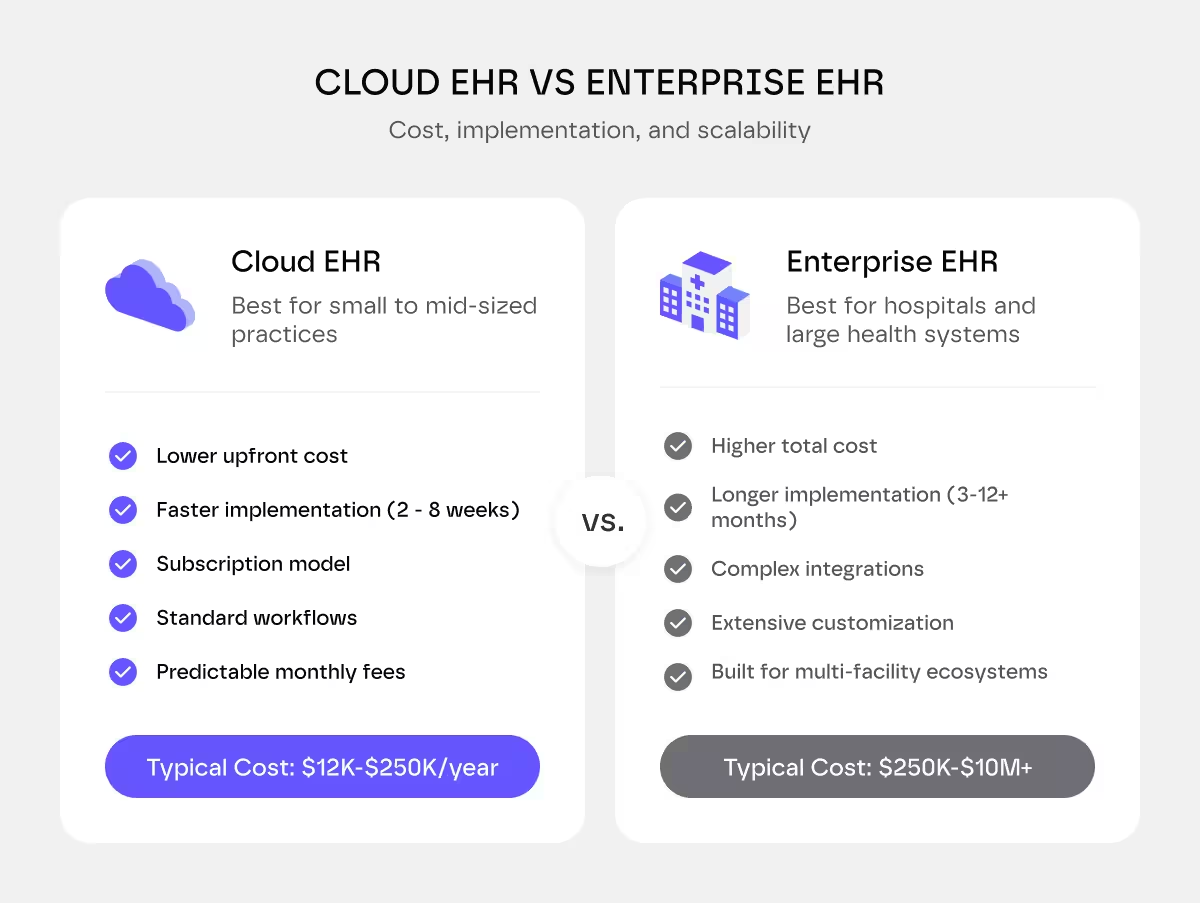
EHR Integrations: What They Actually Cost
This deserves its own section, because it's where quoted budgets fall apart the fastest.
An EHR that can't talk to your other systems isn't really an EHR. It's an expensive filing cabinet.
Billing and Clearinghouse Integration
This connects your EHR to your revenue cycle. Claims, remittances, eligibility checks.
A standard billing interface typically runs $10,000-$30,000 for a small practice with one or two connections. Add a clearinghouse and an RCM platform, and you're looking at $50,000-$100,000 or more.
Patient Portal Integration
Patients expect to book appointments, message providers, and see results online. That expectation is now a cost line, not a nice-to-have.
Portal integration typically adds $3,000-$20,000 per connection, depending on whether it's read-only or lets patients write data back (requesting an appointment change, for example).
Insurance and Payer Integration
This is the one budgets underestimate the most, and it's getting more expensive for a regulatory reason, not a technical one.
CMS finalized the Interoperability and Prior Authorization rule (CMS-0057-F) in January 2024. Operational requirements, like shorter prior authorization turnaround times, took effect January 1, 2026. Full FHIR API requirements for payer data exchange are due by January 1, 2027.
Translation: if you touch Medicare Advantage, Medicaid, or CHIP patients, your EHR's ability to exchange data with payers isn't optional anymore. It's a compliance deadline.
Lab and Diagnostic Integration
Lab interfaces are usually the most technically mature connection you'll build, since HL7 v2 lab messaging has existed for decades.
That maturity doesn't make it free. Budget for lab connection, along with ongoing maintenance, monitoring and vendor API updates.
What vendors don't tell you
The software fee is half your actual bill.
Vendors quote you subscription costs. That's all they mention. Everything else is hidden.
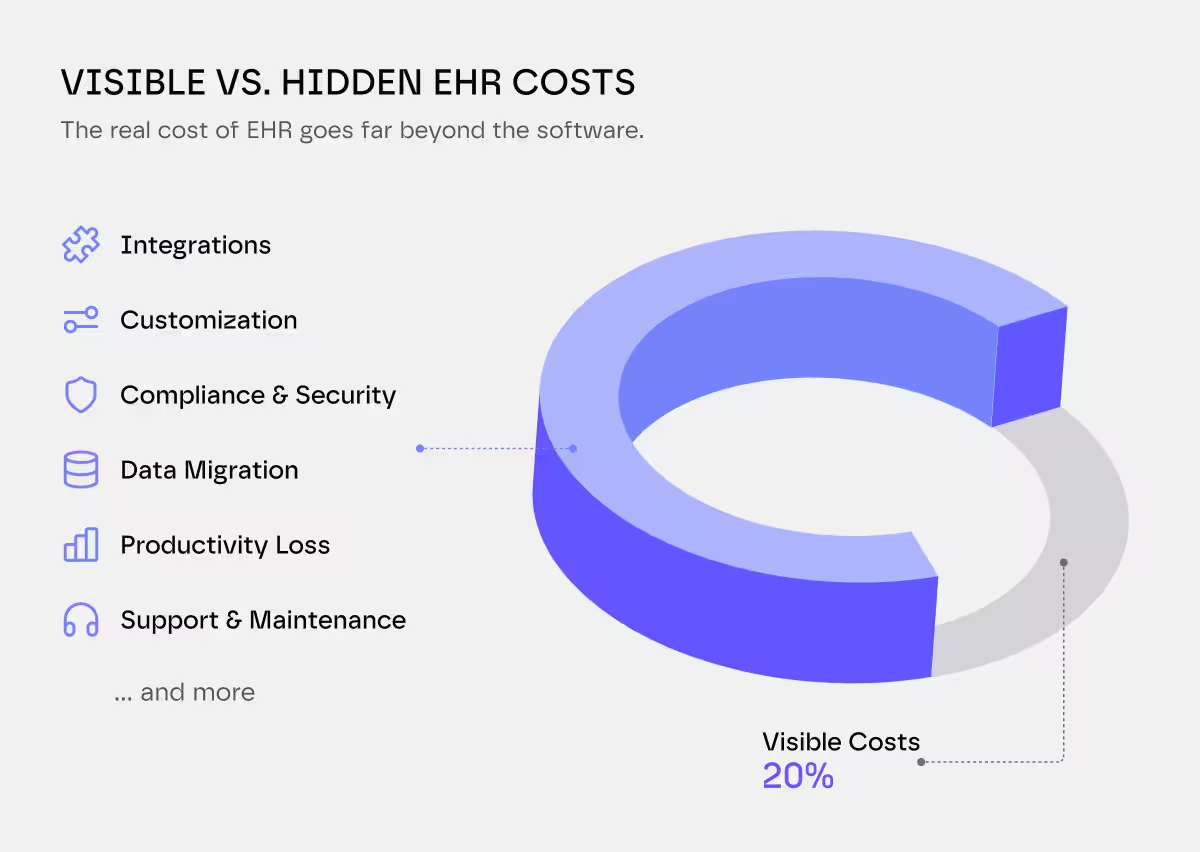
Hardware. Cloud systems help here, but you still need workstations, tablets, backup systems. Budget $10,000-$50,000. Older on-premise systems require $50,000-$150,000 for servers and networking.
Data cleaning. This is expensive. Messy data doesn't just cost money to migrate. It makes your AI worse, your reports worse, your integrations break more often. Old systems have terrible data. Cleaning it runs $5,000-$250,000.
Integrations. Covered above, but worth repeating here: each one costs $3,000-$20,000, and five of them can mean $50,000-$100,000 just to make systems talk to each other.
Security and compliance. HIPAA compliance should be built in. But actually auditing, testing, and documenting it costs money. Budget $5,000-$15,000/year for ongoing compliance work. If you're scoping this properly from the start, our breakdown of HIPAA-compliant software development cost walks through where that budget actually goes.
Support contracts. Most vendors charge 15-25% of your annual software cost just for support. Paying $50,000/year in subscriptions? Add $7,500-$12,500/year for support.
Lost productivity during transition. Your team is slower for 3-6 months. Chart times slow down. Billing drops 10-20%. For a 10-provider clinic, that's $100,000-$200,000 in lost revenue.
A 12-provider clinic budgeted $40,000 for EHR software in Year 1. Here's how the actual bill broke down:
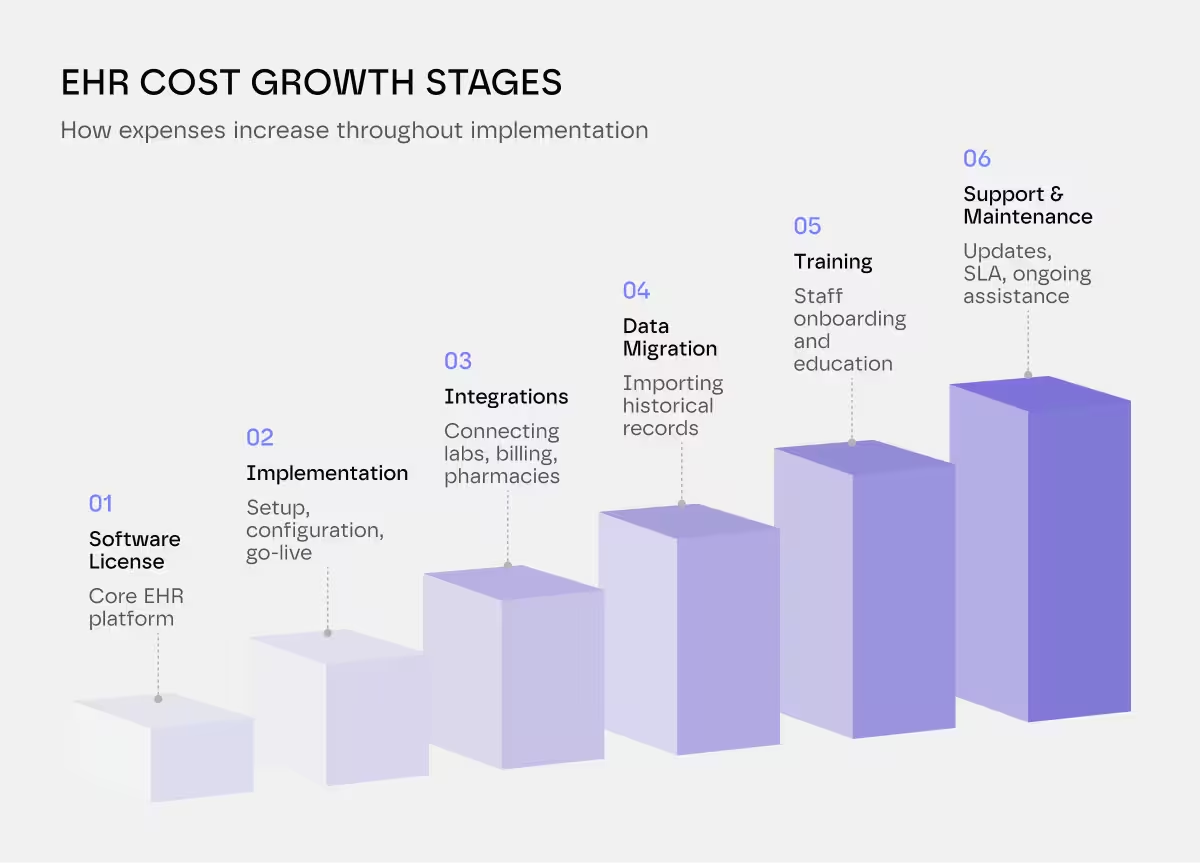
- Software: $40,000
- Implementation: $15,000
- Integrations: $22,000
- Data migration: $18,000
- Training: $4,000
- Support: $8,000
Total: $107,000
That's 2.7x their budget. It happens all the time.
5-year TCO (total cost of ownership) + Calculator
Don't just look at Year 1.
A 10-provider clinic on a mid-tier EHR:
Year 1:
- Year 1 (software, implementation, integrations, migration, training) - $118,000
- Years 2-5, per year (software, maintenance, updates) - $53,000/year
- 5-year total - $330,000
What this table is really showing you: Year 1 is only 36% of your five-year spend. The recurring years quietly add up to more than the launch itself.
That's the number to bring into a budget meeting, not the Year 1 quote a vendor hands you.
According to recent research, most practices achieve positive ROI within 10 months to 2.5 years. The timing depends on implementation quality and whether benefits are actually realized.
Decision Framework: SaaS vs. Custom vs. Hybrid
There isn't one right answer here. There's a right answer for your clinic's size, workflow complexity, budget, and where you want to be in five years.
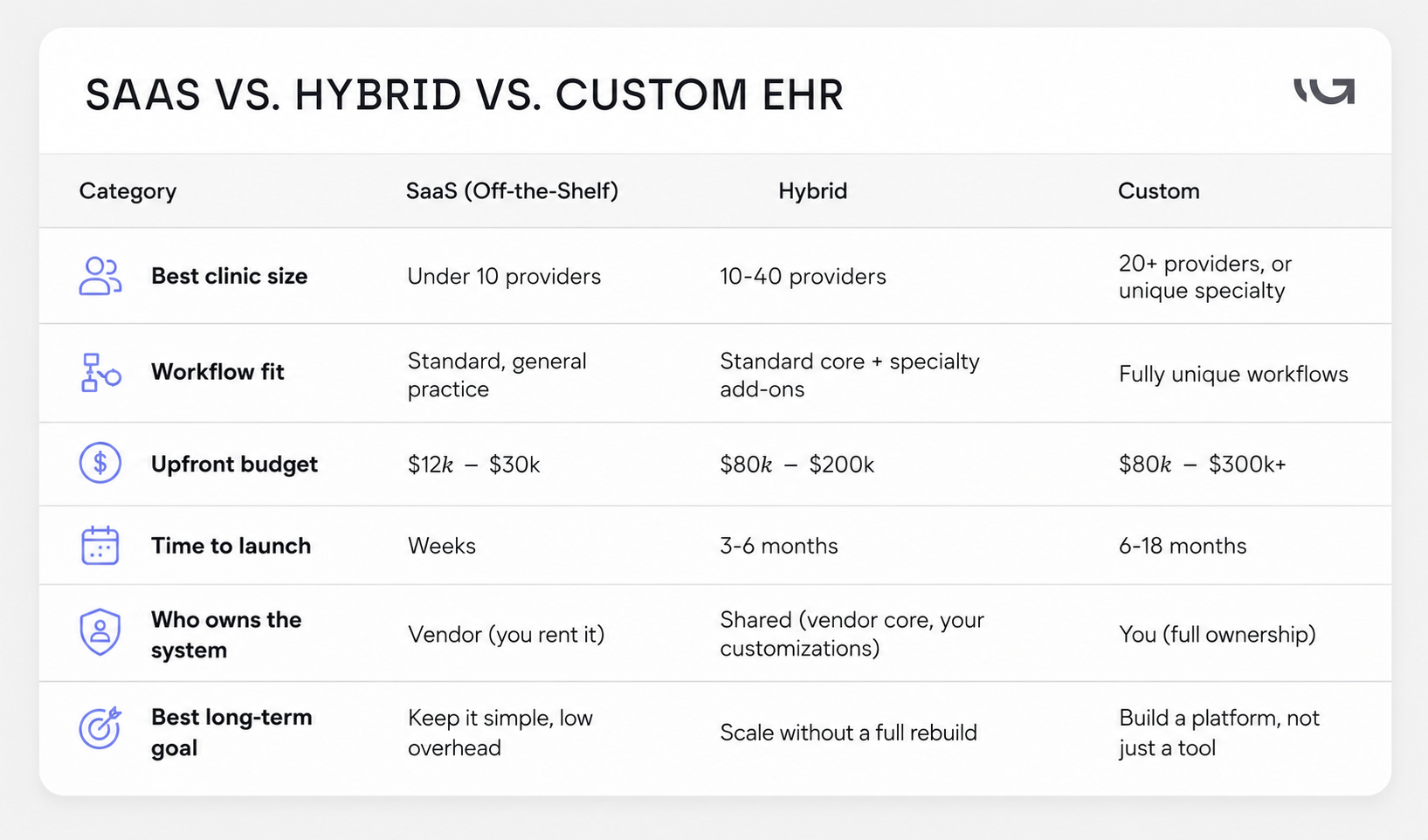
Choose SaaS if: you're a general practice with standard workflows, no major growth plans in the next few years, and you want to be live in weeks, not months.
Choose Hybrid if: your core workflows are standard but a few things (imaging, specialty templates, one non-standard integration) don't fit the box. This is where most growing mid-market practices actually land.
Choose Custom if: you have genuinely unusual workflows, you manage multiple sites with different specialties, you've maxed out what off-the-shelf can do, or you want to build a platform you own rather than rent.
Custom development runs $80K-$300K+, and scope varies widely. A simple clinic-specific system often starts as an MVP before expanding into a larger platform. It's not just an expense; done right, it's an asset. You own the code, not a monthly license.
That ownership creates equity. Five years out, you could have a platform other practices want to license, a system you white-label, or something you fold into a larger health network strategy. Off-the-shelf, you're a customer. Custom, you're a stakeholder.
Staff adoption also tends to run higher with custom builds, since the system was actually shaped around how your team already works. If you want a full breakdown of what drives that price range, our healthcare software development cost guide walks through the real numbers.
Not sure which column you fall into? That's a conversation, not a guess. Talk to Greensighter about scoping your EHR path.
What We Actually See
We build EHRs. Here's what clinics get wrong, organized by where it actually bites them.
Budgeting Mistakes
They focus on per-provider cost. A system at $200/month sounds cheaper than $350/month, until you add $100K in custom work and integrations. Then it's the more expensive option.
They budget Year 1 only. The five-year total is what actually determines whether a system was worth it, and most budgets never look past the launch invoice.
Underestimated Costs
They underestimate integration costs specifically. Vendors quote the software, not the plumbing. Connecting EHR to billing, scheduling, patient portal, and labs is where costs explode, almost every time.
They skip security planning. Cheap EHRs aren't secure by default. Audits, testing, compliance infrastructure all cost money. Skipping it costs far more when a breach happens.
Implementation Challenges
They underestimate the productivity dip. Every clinic loses speed for 3-6 months post-launch. Teams that don't plan for it treat the dip as a crisis instead of an expected phase.
They rush data migration. Messy legacy data doesn't get cleaner by moving faster. Rushed migrations create duplicate records and broken reports clinics are still fixing a year later.
Integration Pitfalls
They treat integrations as a one-time cost. Each interface carries an ongoing $3,000-$15,000/year maintenance bill. Budgets that stop at "implementation" miss this every time.
They pick point-to-point connections at scale. One or two integrations, fine. Five or six, and every vendor update risks breaking a link somewhere. Middleware exists for exactly this reason.
Lessons Learned
They think custom is always more expensive. Not always. If your workflows are genuinely unique, custom is often cheaper over five years than a constant cycle of off-the-shelf workarounds.
They ignore data architecture. How a system stores data affects integration speed, reporting capability, and interoperability years down the line. Pick a vendor who can actually explain their data model, not just their feature list.
EHR Vendor Evaluation Checklist
Before you sign anything, get these answers in writing.
- What's included in the quoted price, and what's billed separately?
- What does each integration (billing, portal, labs, payer) cost individually?
- What's the ongoing annual maintenance cost, per interface?
- Who owns the data, and what does export look like if you leave?
- What's the realistic timeline, including staff training, not just "go-live"?
- What's the expected productivity dip, and for how long?
- Does the vendor support CMS-0057-F's FHIR API requirements today?
- What's included in "support," and what triggers an extra charge?
- Can you see a reference client of similar size and specialty?
- What does Year 2 through Year 5 actually cost, not just Year 1?
If you'd rather have someone else run this evaluation with you, our guide on how to choose a healthcare software development company covers the questions that separate a serious partner from a generalist reading off a checklist.
Conclusion
You're not looking for the cheapest EHR. You're looking for one that scales with your practice and integrates into how you work.
A low sticker price feels good until you're $50,000 deep in integrations and your team is frustrated with workarounds.
The real value shows up when your system talks to billing. When your staff actually uses it. When charts are faster. When your revenue cycle tightens.
We're not going to lie to you: your first bill might hurt. But if you pick the right system, not the cheapest one, the right one, Year 2 is breakeven. Year 3 is pure gains. Your competitors are still wrestling with their bargain EHR. You're running circles around them.
Need help navigating EHR costs? Stop guessing. Schedule a 15-minute consultation with our EHR specialists to understand the real total cost of ownership for your clinic size and specialty, now.