



Do you think of HIPAA compliance as something to “deal with” before launch? Many healthcare software companies think the same.
Then the dreaded security questionnaire arrives.
Or an enterprise buyer starts asking uncomfortable questions.
Or a compliance review uncovers gaps nobody noticed during development.
That is usually when HIPAA starts burning holes in your budget.
See, compliance is not just a legal requirement.
It affects security, vendor evaluations, procurement decisions, enterprise partnerships, and patient trust.
The problem starts when you focus on features first, and leave compliance on the backburner.
That approach creates risk.
And we aren’t just talking about regulatory risk.
A failed security review can delay deals.
A failed audit can damage credibility.
Poorly planned architecture? It triggers expensive rebuilds long after launch.
But, like always, there’s a silver lining.
Most compliance issues are preventable.
In this guide, Greensighter breaks down the most important items every HIPAA compliance checklist should include.
We also talk about the most common mistakes healthcare software companies make.
And, as always, we will prep you for a successful HIPAA compliance assessment before problems become expensive.
Why HIPAA Compliance Problems Start Earlier Than Most Teams Think
Treating HIPAA as a security problem is one of the age-old mistakes we see a lot.
Why? Because HIPAA affects how you design, build, integrate, monitor, and maintain healthcare products.
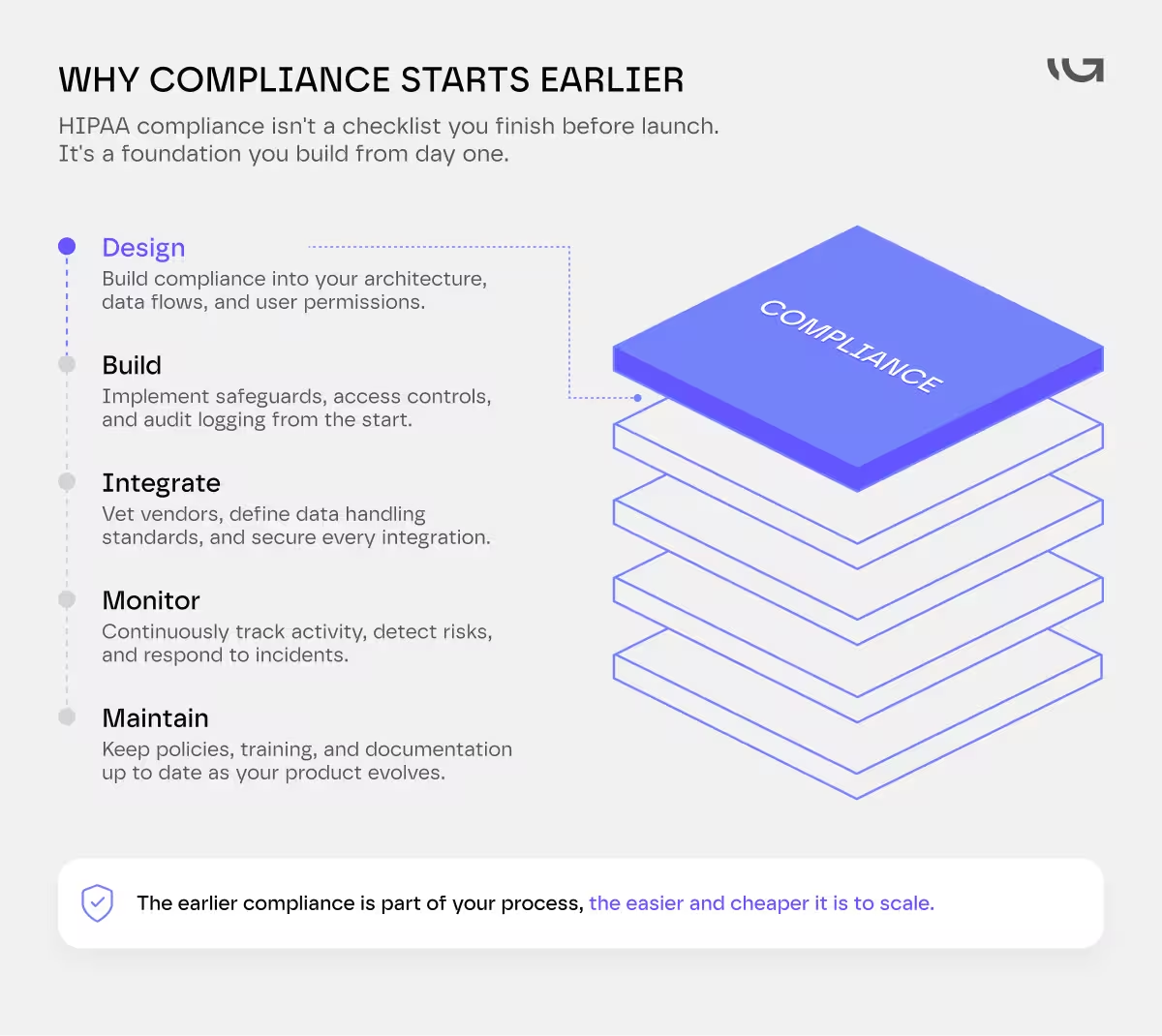
Every decision influences compliance:
- User authentication
- Access permissions
- Audit logging
- Data storage
- Infrastructure architecture
- Third-party integrations
This is why many healthcare software companies run into trouble.
Compliance discussions happen too late.
Thфe product launches first.
The compliance conversation comes later.
Unfortunately, healthcare systems rarely work that way.
The longer compliance is delayed, the more high-ticket fix it becomes.
What is HIPAA Compliance?
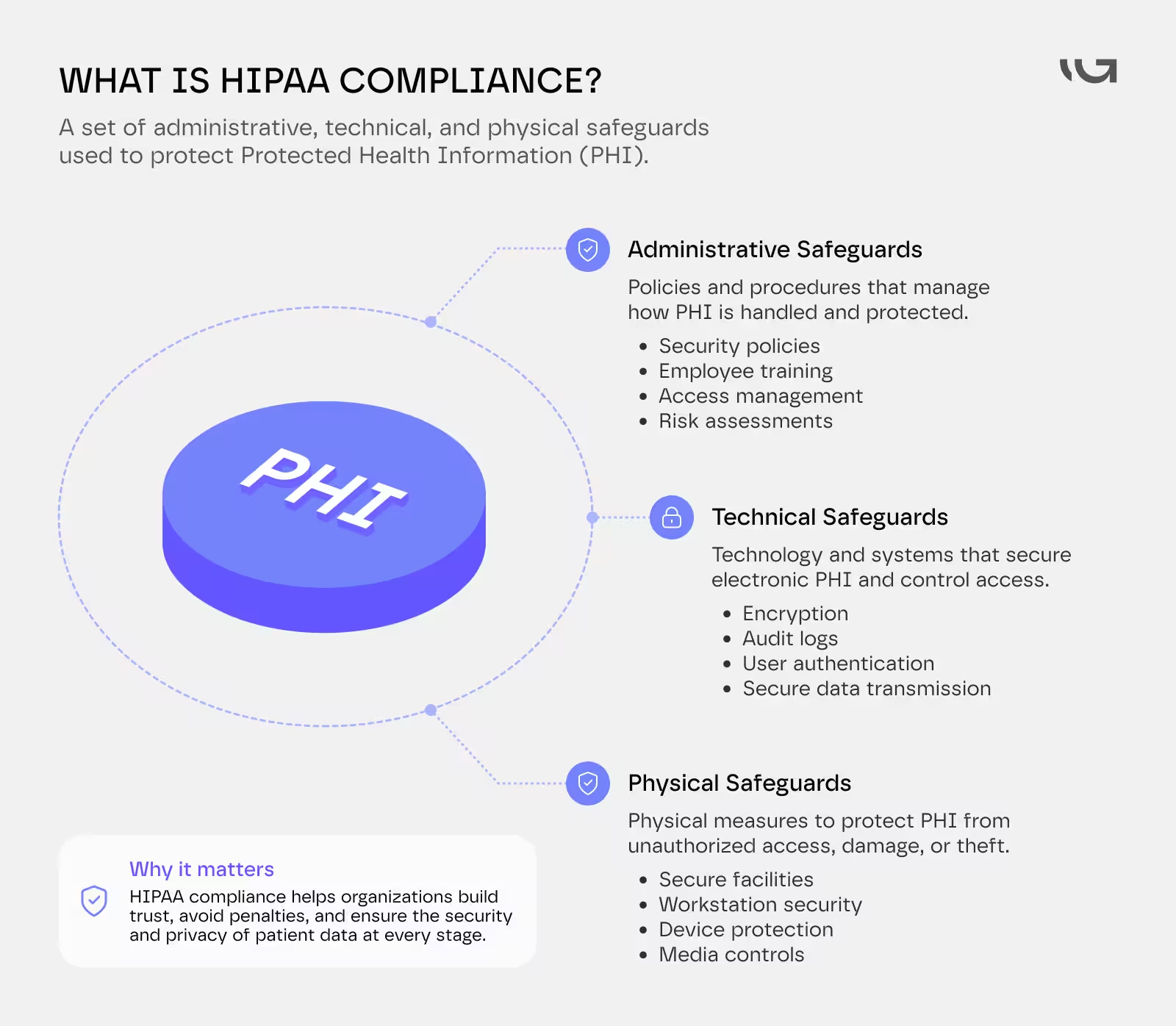
Think of it as administrative, technical, and physical safeguards.
These are things you use to uphold Protected Health Information (PHI).
It influences how applications:
- Authenticate users
- Manage permissions
- Store information
- Monitor activity
- Respond to incidents
- Work with third-party vendors
Passing an audit isn't the goal here.
The goal is to build systems that protect patient privacy.
You also need to aim for reduced operational risk and maintaining trust across the entire ecosystem.
Let's take a look at the HIPPA compliance audit checklist below.
The HIPAA Compliance Checklist
If you're preparing for a HIPAA compliance audit or conducting a HIPAA compliance assessment, these are the areas you can’t afford to overlook.
.avif)
1. Implement Granular Identity and Access Management (IAM)
Not every employee should have access to every piece of patient information.
With a strong Identity and Access Management (IAM) strategy, you can make sure that users can only access the data necessary for their role.
This includes:
- Role-based permissions
- User authentication
- Session management
- Account provisioning
- Least-privilege access
- Periodic access reviews
Without proper access controls, sensitive patient information becomes exposed.
With that exposure comes risk.
Granular access management helps protect patient information.
It also leads to secure day-to-day operations.
2. Maintain Comprehensive Audit Logs
Healthcare organizations must be able to track who accessed patient information and when.
Audit logs support:
- Compliance investigations
- Security monitoring
- Incident response
- Internal reviews
Think of them as the primary source of evidence during security events.
Without them, you’ll have a hard time identifying the cause.
3. Encrypt Protected Health Information
This one is a given.
Encryption is one of the central pillars of HIPAA compliance requirements.
Protected Health Information (PHI) should be encrypted:
- At rest
- In transit
This includes:
- Databases
- File storage
- Backups
- API communications
You can’t eliminate risk entirely with encryption.
But, you can reduce the impact of unauthorized access.
4. Conduct Regular Risk Assessments
Ongoing risk analysis is one of those “hidden in plain sight” items on a HIPAA compliance checklist.
We’ve seen many organizations perform a review once and assume they’re finished.
That’s a mistake.
Healthcare software environments change all time.
New integrations. New infrastructure. New workflows. New vendors.
Each change introduces potential risk.
Regular HIPAA compliance assessments cut off vulnerabilities right at the source.
=cta=
5. Establish Business Associate Agreements (BAAs)
Many healthcare products rely on third-party providers.
Cloud infrastructure.
Communication platforms.
Analytics tools.
Hosting providers.
If those vendors handle Protected Health Information, appropriate Business Associate Agreements (BAAs) may be required.
Failing to establish BAAs can create serious compliance exposure.
Even when the software itself is secure.
6. Establish Data Retention and Secure Disposal Policies
Protecting patient data also means knowing when to keep it, and when to remove it.
It's important that you define clear policies for managing Protected Health Information (PHI).
These policies should cover:
- Data retention periods
- Secure storage of archived records
- Access to historical data
- Secure deletion and disposal procedures
- Legal and regulatory retention requirements
The more information you hoard, the more you risk increasing security exposure.
This makes compliance harder to manage.
Put together a well-defined retention policy, and you'll both reduce risk and stay prepared for audits and regulatory reviews.
7. Develop an Incident Response Plan
Security incidents happen.
It’s not a question of whether an organization will encounter security events.
The question is whether it’s prepared.
A strong incident response plan lays out:
- Responsibilities
- Escalation procedures
- Communication protocols
- Containment strategies
- Recovery processes
Without a documented response plan, you might lose valuable time during critical situations.
8. Review Third-Party Vendors Carefully
We consider third-party software one of the biggest compliance blind spots, and here’s why:
Healthcare organizations frequently integrate:
- Payment providers
- Messaging systems
- Analytics tools
- Cloud infrastructure
- AI services
Every external vendor introduces potential compliance risk.
This is why vendor reviews should become part of every compliance check process.
Even if your platform is under lock and key, it can still become vulnerable through insecure integrations.
9. Maintain Documentation and Employee Training
Compliance can’t live exclusively inside documentation folders.
Employees need to understand:
- Security responsibilities
- Privacy requirements
- Escalation procedures
- Compliance expectations
Training should be second nature.
Documentation should remain current.
Policies that nobody understands provide little practical protection.
10. Monitor Compliance Continuously
If you’re treating compliance as a milestone, stop now.
Think of it as an ongoing operational responsibility.
Monitor on a constant basis, and you won’t have to deal with larger compliance failures in the long run.
Common HIPAA Compliance Mistakes
Many compliance failures stem from the same recurring issues.
Assuming Secure Infrastructure Equals Compliance
Security supports compliance.
It does not automatically create compliance.
You could have a secure cloud environment, but it might not satisfy HIPAA obligations.
Processes matter just as much as technology.
Waiting Until Launch to Think About Compliance
This is one of the budget-draining mistakes software teams make.
Compliance requirements influence architecture decisions from the beginning.
Addressing them later often creates technical debt that will cost you a pretty penny.
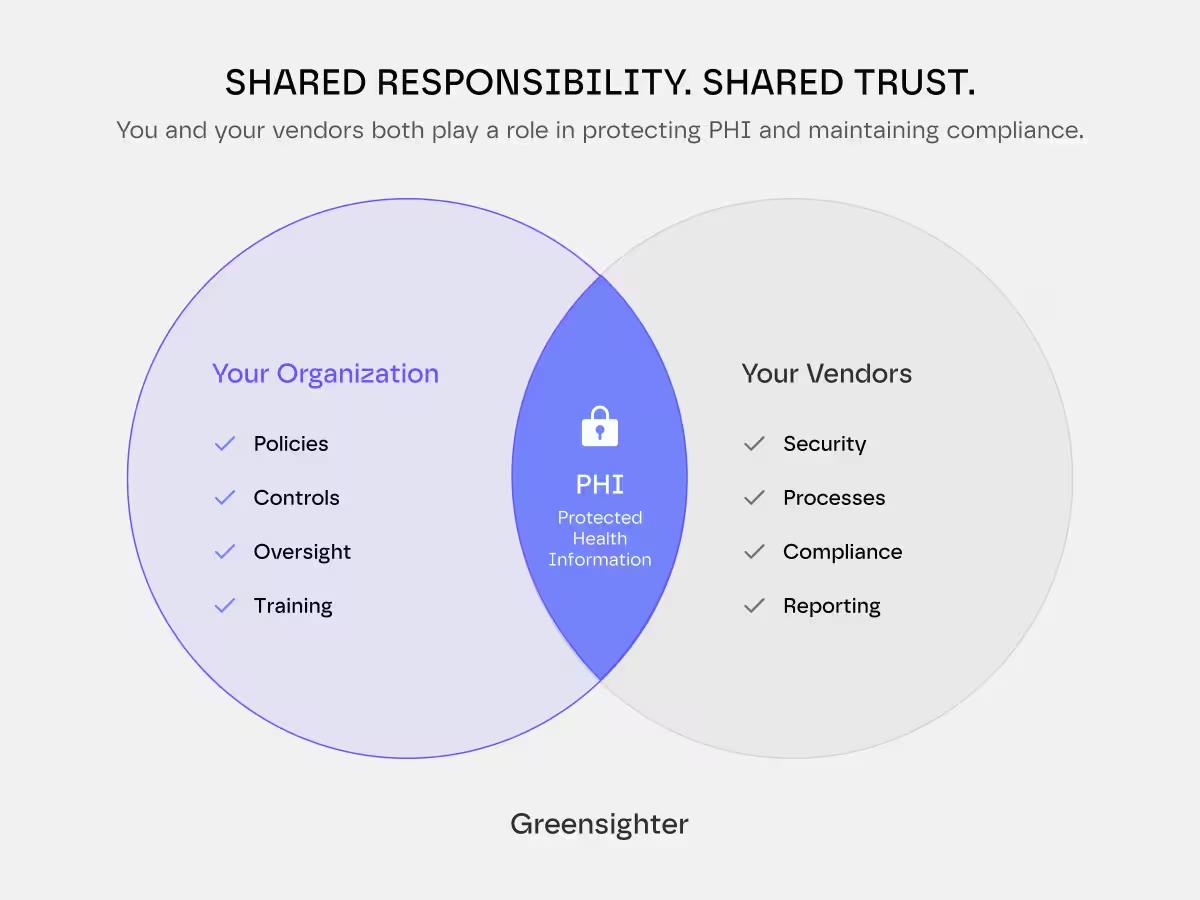
Relying Entirely on Vendors
Using HIPAA-ready vendors does not automatically make your product HIPAA compliant.
Responsibility remains shared.
Every healthcare software company still needs internal policies, controls, and oversight.
Treating Compliance as a One-Time Exercise
Healthcare compliance is never "finished."
Organizations that stop monitoring eventually fall behind.
HIPAA Is No Longer the Only Standard Buyers Look At
Enterprise healthcare buyers increasingly evaluate vendors beyond HIPAA.
Today, trust signals often include:
- SOC 2 Type II
- HL7 interoperability
- FHIR interoperability standard
- Security certifications
- Infrastructure maturity
Each one answers a different question:
- Can the platform protect sensitive data?
- Can it exchange information with other healthcare systems?
- Can it scale securely as the organization grows?
These aren’t just "nice-to-have" capabilities.
For many hospitals, healthcare providers, and enterprise buyers, they are part of the procurement process.
Organizations want confidence that a platform can integrate without hurdles.
These standards influence:
- Procurement reviews
- Vendor evaluations
- Enterprise partnerships
They also send a clear signal:
Your healthcare software company understands the realities of modern healthcare ecosystems.
Buyers usually view these standards as indicators of long-term operational maturity.
Meeting HIPAA requirements may help you enter that conversation.
Want to win the business? Demonstrate broader technical and operational readiness.
That’s usually the key.
=cta-black=
Final Thoughts
HIPAA compliance is all about building trust with patients, partners, and enterprise buyers.
Treat compliance as part of product strategy.
It affects everything, from architecture and security to procurement and long-term growth.
The earlier it becomes part of the conversation, the easier it becomes to scale responsibly.
Talk to Greensighter about building healthcare products that are secure, scalable, and compliance-ready.
FAQs
What is a HIPAA compliance checklist?
It’s structured framework used to evaluate whether a healthcare organization or software platform meets key HIPAA requirements.
It typically covers security controls, risk management, access permissions, audit logging, and documentation practices.
What are HIPAA compliance requirements for healthcare software companies?
Common HIPAA compliance requirements include access controls, encryption, audit logging, risk assessments, vendor management, employee training, and incident response planning.
These might change depending on how Protected Health Information is collected, stored, or processed.
What happens during a HIPAA compliance audit?
It reviews policies, security controls, documentation, training records, and operational practices.
The goal is to determine whether appropriate safeguards are in place to protect patient information.
How often should a HIPAA compliance assessment be performed?
You should perform risk assessments regularly and whenever significant system changes occur.
Think of it as an ongoing process rather than a one-time project.
Does HIPAA apply to SaaS companies?
It can.
If a SaaS platform stores, processes, or transmits Protected Health Information on behalf of healthcare organizations, HIPAA obligations may apply.
Is HIPAA compliance enough for healthcare software vendors?
Not always.
Many enterprise healthcare buyers also evaluate vendors based on standards such as SOC 2 Type II, HL7, and FHIR.
These standards help demonstrate operational maturity, security readiness, and interoperability capabilities.