



Is your telemedicine app failing even though you spent a fortune polishing it?
Don’t worry. None of this means your idea was bad, or your patients aren’t looking for virtual care.
It could, however, mean that you’ve been building the wrong product. And you’re not the only one.
This is more common than most healthcare providers realize.
The problem usually lies in the wrong approach to telemedicine app development. Many clinics think of it as a branding project.
The reality is simple: most telemedicine app mistakes happen long before development starts.
Poor workflows, not being on the same wavelength as patients, weak infrastructure, feature overload, cutting corners in compliance…all of these issues add up quickly.
And once the platform is live, fixing them turns into a runaway budget.
At Greensighter, we work with healthcare businesses from a product and UX perspective first.
Instead of looking at healthcare apps as just digital products, we think of them as operational systems. This helps us set the right course.
With that in mind, let’s look at:

Why Telemedicine Apps Fail
The things that determine long-term adoption by patients and medical staff get pushed aside, and clinics tend to make common telemedicine app mistakes, such as:
Building Around Features Instead of Workflows
In other words, building feature lists instead of patients’ journeys. This is one of the biggest telehealth app challenges.
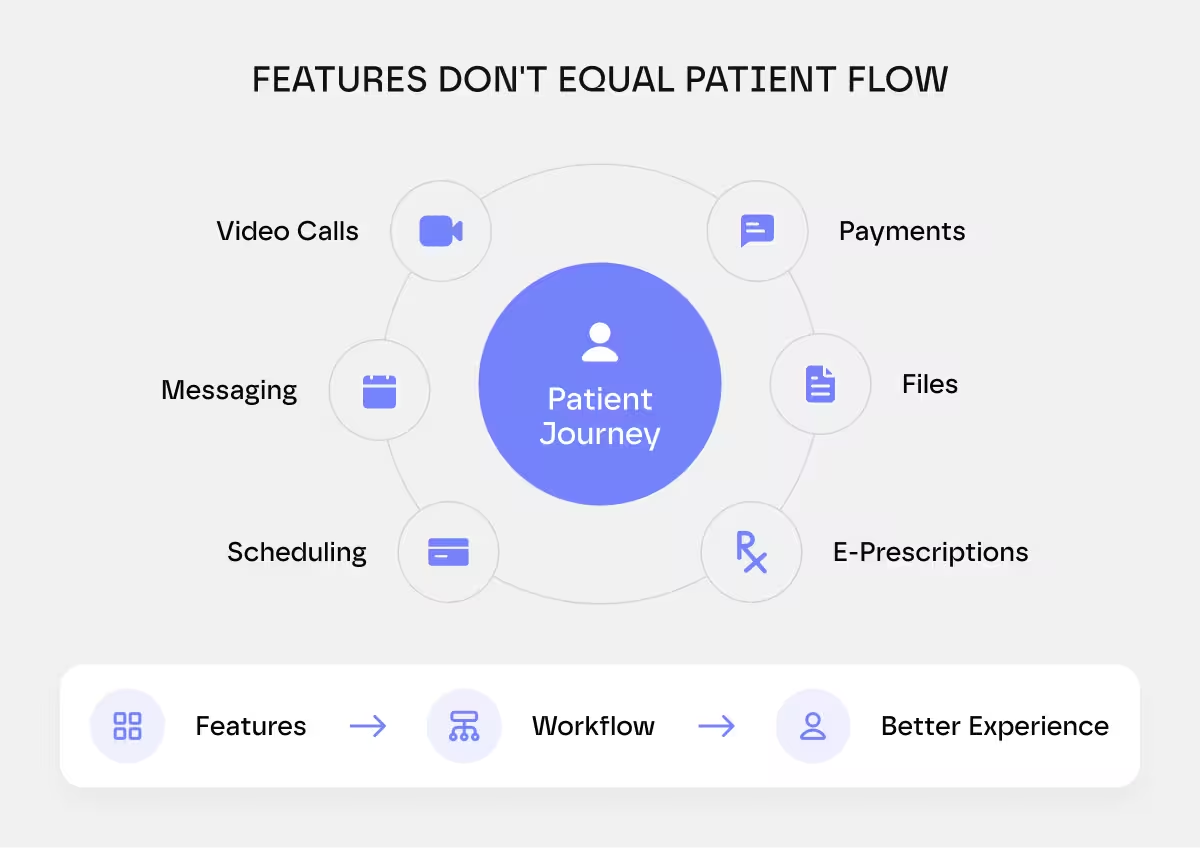
You might add:
- Video consultations
- Messaging systems
- File uploads
- Appointment scheduling
- Payment integrations
- E-prescriptions
All of which are great; but you might fail to ask the more important question:
How does care actually move through the platform?
Doctors don’t think in terms of app features.
They think in terms of:
- Reviewing patient history
- Handling consultations efficiently
- Documenting visits quickly
- Issuing prescriptions
- Moving to the next patient without friction
Patients think even more simply.
They want to:
- Book fast
- Join consultations easily
- Understand what happens next
- Avoid confusion
If your product ignores these behavioral realities, you’ll end up with common telemedicine app mistakes.
The result is usually the same:
A platform that functions from a technical perspective, but using it feels exhausting.
Common Telemedicine UX Mistakes
Healthcare UX is different from standard SaaS UX.
Stress levels are higher.
Patients may be elderly, anxious, distracted, or unfamiliar with digital tools. Doctors are multitasking under time pressure.
That changes everything.

Overcomplicated Onboarding
Telemedicide platforms sometimes ask patients to do too much, too early.
Create an account, verify emails, upload documents, complete forms, configure profiles…
And all of that happens before the patient can even book an appointment.
According to a Baymard Institute usability study, lengthy or complicated processes are a major cause of user abandonment in digital experiences.
In healthcare, the impact is even worse. Patients often jump ship and call the clinic instead.
All of this defeats the purpose of the platform.
Poor Mobile Experience
Nearly 60% of global web traffic happens on mobile devices, including telehealth interactions.
If you take a desktop-first approach to your telemedicine app, you risk creating tiny tap areas, unreadable forms, confusing consultation entry flows, and broken camera permissions.
Patients shouldn’t need technical knowledge just to join a medical consultation. The whole point of a telemedicine platform is to reduce stress instead of introducing it.
Weak Consultation Flows
One common issue we see at Greensighter is consultation flow fragmentation.
The patient joins the call.
Then they need to:
- Switch tabs
- Upload documents elsewhere
- Return to another screen
- Search for prescriptions
- Re-enter information
Every additional action increases drop-off risk.
Healthcare UX should feel linear and guided instead of juggling five disconnected systems.
=cta=
Prioritizing the Wrong Features
Feature prioritization is a big deal.
Advanced functionalities shouldn’t come before validating core operational needs.

If you want:
- AI modules
- Wearable integrations
- Multilingual ecosystems
- Complex dashboards
- Advanced analytics
But your platform is still struggling with:
- Appointment reliability
- Video stability
- Notifications
- Doctor availability visibility
- Basic usability
Then you’re looking at this from the wrong angle. A stable core experience matters more than impressive feature lists, especially for early-stage telemedicine products.
If you look at research, you’ll see that software project failure is often linked to unclear requirements, changing priorities, and excessive complexity.
Operational requirements tend to evolve on a constant basis in healthcare platforms, making them vulnerable.
The smartest telehealth products usually start smaller than clinics expect.
But they solve the critical workflows extremely well.
Compliance Issues in Telehealth Apps
Compliance is where many telemedicine projects become dangerous.
Not just inefficient. Dangerous.
Healthcare data is heavily regulated, which is exactly why you should think of compliance as a product-level requirement, not a final development checklist.
This is where you also need to think beyond basic compliance checklists.
Interoperability standards such as HL7 and FHIR are becoming must-haves in modern telemedicine platforms.
Not factoring in interoperability will cause:
- Fragmented patient records
- Disconnected scheduling systems
- Operational bottlenecks
All of these become more expensive to fix later.
Then there's the case of security expectations. They're just as high.
When healthcare providers evaluate digital products, they look for infrastructure that's aligned with standards like SOC 2 Type II.
All of these acronyms are actually trust signals.
They'll influence vendor evaluation, enterprise partnerships and a long-term platform cred that's great to have.
Delaying Compliance Discussions
HIPAA, GDPR, and regional healthcare regulations impact architecture decisions from day one.
Encryption standards, data storage, access control, audit logging, consent management, you name it.
All of these affect product design and infrastructure.
HIPAA compliance failures can result in major financial penalties and reputational damage.
You can outsource development, which is something that many clinics do. However, make sure you involve compliance stakeholders early enough.
Otherwise, you might face expensive rebuilds later on.
Using Generic Communication Tools
Some clinics attempt to shortcut development by relying on generic video or messaging tools that were never designed for healthcare environments.
That creates risk around:
- Data privacy
- Patient consent
- Access management
- Medical documentation
- Security auditing
A telemedicine app is a healthcare delivery ecosystem, and you should treat it as such.
Ignoring Role-Based Access
Healthcare systems involve multiple user types: doctors, nurses, administrators, reception staff, patients.
Each role requires different permissions.
If you oversimplify access management during development, it’ll lead to both security risks and operational confusion.
You can’t separate good healthcare UX from security architecture. They’re joined at the hips.
Scaling Telemedicine Platforms Is Usually an Afterthought
And it shouldn’t be. If you build telemedicine products as if they will never grow, you’ll run into problems once usage increases.
In fact, scalability is one of the biggest telehealth app challenges, especially during.
- Seasonal demand spikes
- Marketing campaigns
- Regional expansion
- Multi-location onboarding
- Provider growth
A platform that works for 10 doctors may fail completely at 200.
We’re also seeing more clinics experiment with AI-assisted or “vibe-coded” MVP development to accelerate launch timelines.
That approach may work for simple prototypes, but it might become dangerous in healthcare environments.
You’re handling compliance, scalability, patient data handling, and operational workflows. There isn’t much room for improvisation.
Architectural shortcuts become real operational risks very quickly.
Frail Infrastructure Planning
Video infrastructure alone creates significant technical pressure.
You need to keep in mind things like bandwidth, latency, session management, recording storage, and real-time communication scaling Bandwidth.
Plan the architecture poorly, and see the performance drop fast under load.
And in healthcare, users are far less tolerant of instability.
Patients might look past buffering on entertainment apps, but they won’t turn the other cheek when their medical consultations are interrupted.
Monolithic Systems Create Long-Term Problems
Many telemedicine platforms run on rails.
That makes updates feel like bending steel.
Adding new clinic locations, integrations, consultation types, payment providers and compliance requirements becomes increasingly expensive over time.
This is why scalable architecture planning matters early.
At Greensighter, we help healthcare businesses think beyond launch day.
That includes:
- Scalable UX systems
- Modular product planning
- Patient flow optimization
- Healthcare-focused content and interface strategy
- Conversion-focused telehealth experiences
Ignoring Internal Adoption
Here are more reasons why telemedicine apps fail:
The staff never fully adopts them.
Doctors continue using external tools. Reception teams bypass workflows.
Patients keep calling instead of using the platform. That usually signals a product design problem.
Excluding Internal Users From Product Decisions
Many clinics build platforms top-down.
Leadership approves features. developers implement them, but the actual medical staff barely participates in workflow planning.
That creates operational mismatch right off that bat.
The people using the system every day should influence:
- Appointment flows
- Consultation interfaces
- Documentation structures
- Communication patterns
- Escalation processes
Without that input, the platform becomes disconnected from reality.
Treating Telemedicine Like a Side Feature
This may be the biggest strategic mistake of all.
Telemedicine is not simply an extension of a clinic website.
Look how many things in affects:
- Patient acquisition
- Operational efficiency
- Retention
- Trust
- Care accessibility
- Brand perception
Patients increasingly evaluate healthcare providers through digital experience quality.
According to McKinsey, telehealth usage remains significantly higher than pre-pandemic levels.
This means that long-term behavioral change is more popular than temporary adoption.
What does this mean for clinics? It means they can no longer afford fragmented digital experiences.
Your telemedicine product is part of your healthcare operation. Don’t treat it as something optional.
Final Thoughts
Most telemedicine app mistakes are not strategic.
The clinics that succeed with telehealth platforms usually focus on three things early:
- Operational workflows
- Patient experience
- Scalable infrastructure
Everything else comes after that.
The goal is not simply to launch a telemedicine app. What you need to build is a platform that patients and staff will trust. That requires more than development.
It requires product thinking. It requires UX thinking, and auditing afterwards.
And it requires understanding how healthcare operations behave in the real world.
If your clinic is evaluating a telemedicine platform or planning a redesign, talk to Greensighter about your project.
We help healthcare businesses build digital experiences that scale properly, reduce friction, and support long-term growth.
FAQs
Why do telemedicine apps fail so often?
That’s likely because clinics focus too heavily on features instead of operational workflows.
They also tend to not prioritize patient behavior, scalability, and compliance requirements.
Many platforms technically function but create enough friction to reduce long-term patient and staff adoption.
What are the most common telemedicine app mistakes?
From our experience, here are the most common telemedicine app mistakes:
- Overcomplicated onboarding
- Poor mobile UX
- Fragmented consultation flows
- Weak scalability planning
- Ignoring compliance requirements
- Feature overload
- Disconnected operational workflows
Why is UX important in telemedicine platforms?
Telemedicine UX directly affects patient trust, appointment completion, onboarding success, and long-term platform adoption.
Patients expect healthcare experiences to feel simple, clear, and accessible across devices.
Even small UX issues can cut conversions down.
What compliance standards matter for telemedicine apps?
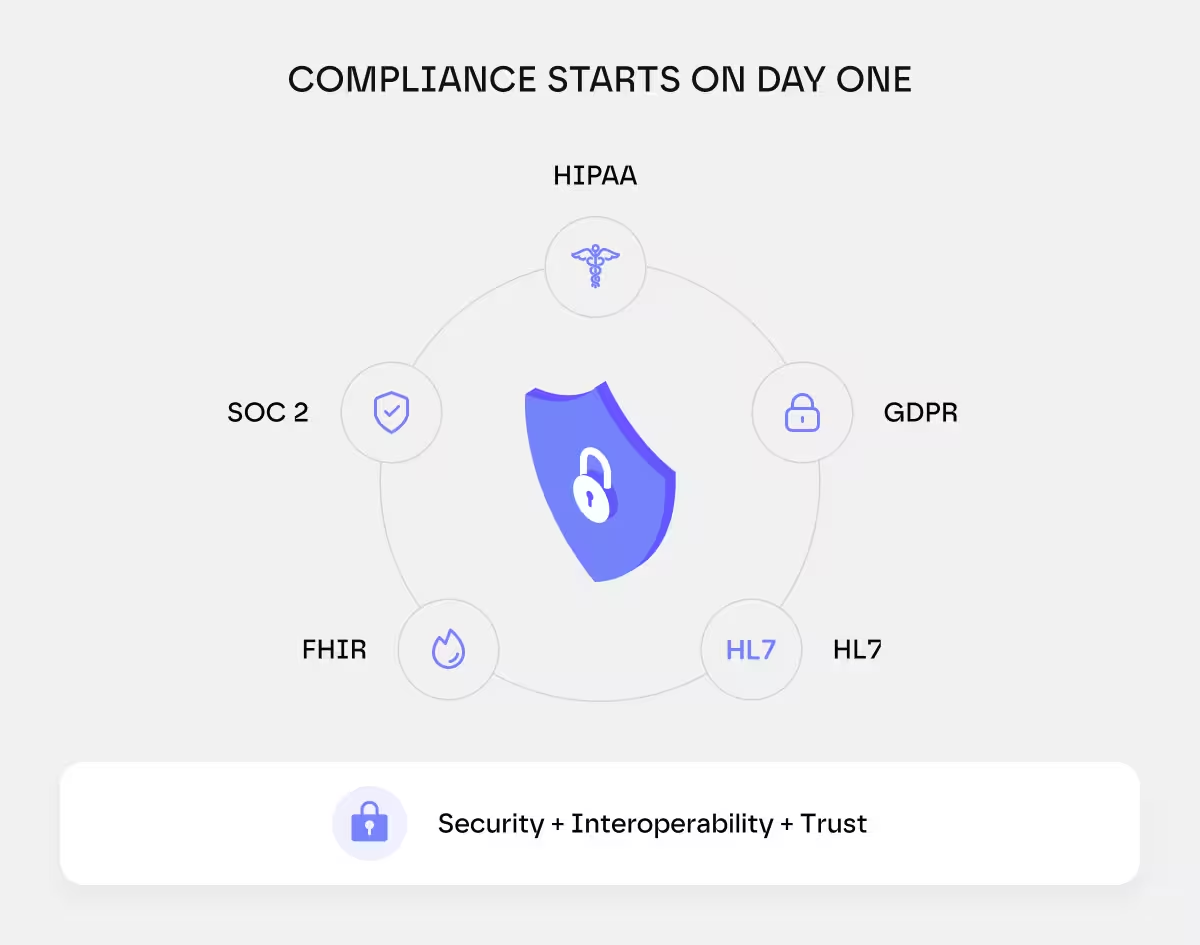
Telemedicine platforms often need to account for standards and frameworks such as:
- HIPAA
- GDPR
- HL7
- FHIR
- SOC 2 Type II
Requirements vary depending on region, infrastructure, and healthcare use cases.
=cta-glass=


.webp)
.webp)
.webp)