



The SaaS tool worked fine at first.
Fast implementation. Predictable costs. No servers to manage. Your team adapted to the software's workflow.
Then you grew. Added another location. Started taking insurance you didn't before. Needed integrations, the vendor said they'd build, but never did.
Now you're paying for features you don't use. The tool doesn't talk to your EHR the way you need. Your billing process still requires manual work. Patients complain about the patient portal.
And the vendor's roadmap? It doesn't include what you actually need.
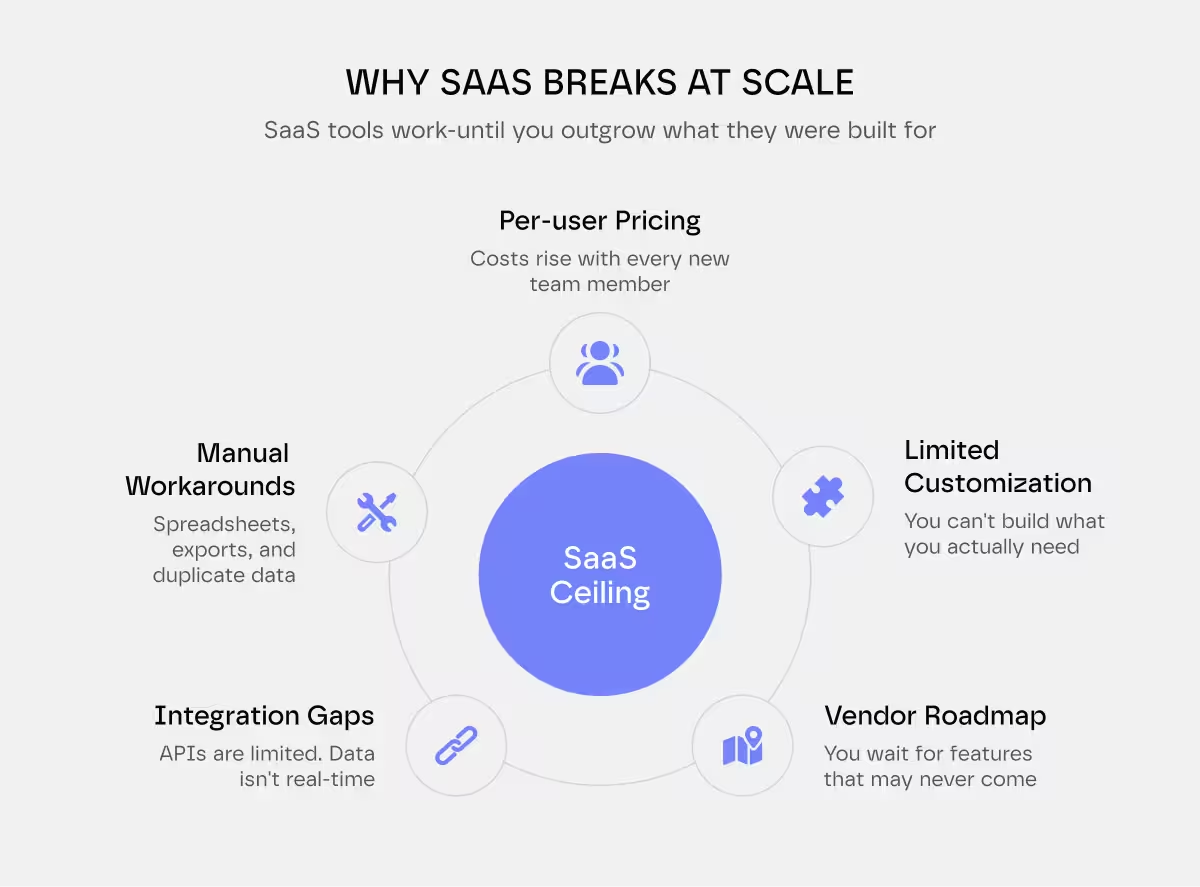
This is the SaaS ceiling. And clinics hit it faster than they expect.
What is the Problem with SaaS at Scale?
SaaS tools are built for the average clinic. General practice. Standard workflows. Common integrations.
The moment you're not average, the tool becomes a constraint.
Per-user SaaS starts from $100 and may go $600+ per user/month. Add five more staff? That's five more subscriptions. Fifty staff? You're now paying enterprise prices for a tool that still doesn't fit your workflows.
For a 50-provider practice, that's approximately $35,880 per year, often more than the cost of a custom MVP over the same period.
Customization is limited. The vendor controls the roadmap. If your need isn't on their priority list, you wait. Or you build workarounds that slow everything down.
Integration gaps multiply.
You need the booking tool to talk to your EHR. The EHR to talk to billing. Billing to talk to your patient portal. SaaS tools connect to other SaaS tools through APIs. But those APIs are often limited. Data syncs on a schedule, not in real time. Manual uploads. CSV exports. Duplicate data.
By the time you realize SaaS isn't working, you've already invested six months and $50,000. Switching means rebuilding workflows all over again.
Are you too stuck in this SaaS trap?
Most clinics don't realize they've outgrown their tool until they're deep into inefficient workarounds. We help practices evaluate whether it's time to switch, and what actually changes when you do.
Get Your SaaS Evaluation Today!
The Hidden Costs of Staying with SaaS Too Long
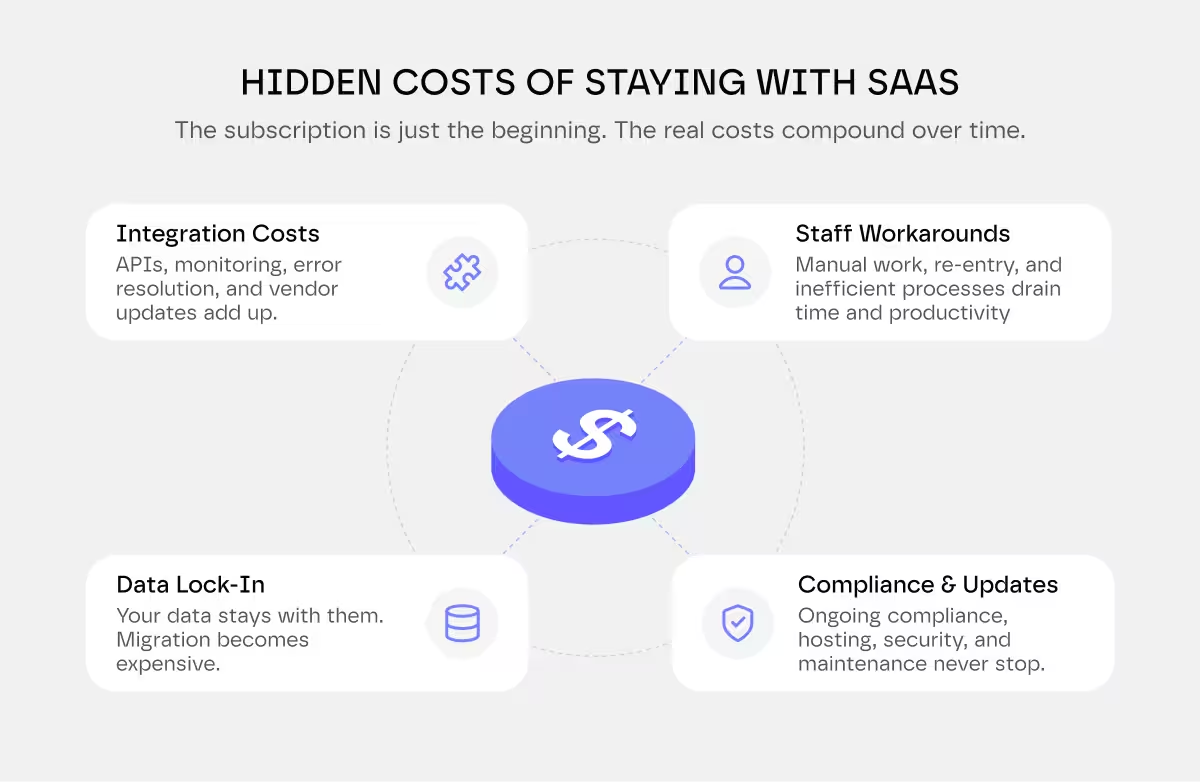
Most clinics calculate the cost of switching incorrectly.
They compare the SaaS subscription fee to custom development costs. SaaS looks cheaper.
But that's not the full picture.
- Integration costs that compound. API connections. Monitoring. Error resolution. Vendor updates. One tool, then two, then three. Each one costs time and money.
- Per-user costs at scale. Per-user costs scale permanently. $100/month per user. That doesn't change at 5 providers or 20 providers. Over five years at scale, you're paying $120,000+ for software that still doesn't fit.
- Data locked in. Want to switch? Your data stays with them. Switching costs, migration, rebuilding workflows, and retraining staff are significant and unpredictable.
- Post-launch costs nobody budgets for. Many healthcare projects succeed at launch and fail by month 14. Why? Ongoing compliance, hosting, and maintenance weren't planned. These costs compound yearly.
- Compliance is built for no one in particular. SaaS tools pass audits. But they're audited to a standard, not your environment. Custom software fits your exact compliance and security needs. SaaS makes you fit its box.
What is the Real Cost of Staying? An Example
A mid-size primary care clinic with 15 providers on a SaaS platform:
Year 1:
- SaaS subscriptions: $36,000 (15 users × $200/month)
- Integration costs: $8,000
- Staff time on workarounds: $15,000
- Year 1 Total: $59,000
Years 2-5 (per year):
- SaaS subscriptions: $36,000
- Integration maintenance: $3,000–$15,000 annually
- Staff time: $15,000
- Annual: $54,000–$66,000/year
5-year total: $276,000–$330,000
And the tool still doesn't fit your workflows. Your staff is frustrated. Patient intake is slower than that of competitors. Billing cycles are longer.
Custom Software (5-year view):
Development:
$80,000–$150,000 (mid-complexity custom application with FHIR integration and EHR connectivity)
Year 1 implementation: $15,000
Years 2-5 support & updates: According to industry research, plan for 15–25% of your initial development investment annually in ongoing maintenance, security monitoring, and compliance updates.
Estimated annual maintenance (Years 2-5): $12,000–$38,000 per year 5-year total: $175,000–$341,000 (depending on development cost and maintenance level)
With proper planning, many clinics see positive ROI by Year 2. Plus:
- Workflows built around your clinic, not a template
- Direct EHR integration with real-time data sync
- Billing automation that fits your insurance mix
- Patient portal that your patients actually use
- Zero per-user fees as you scale
Years 3-5 show consistent operational efficiency gains as workaround costs disappear and staff productivity improves.
Here's a quick comparison:
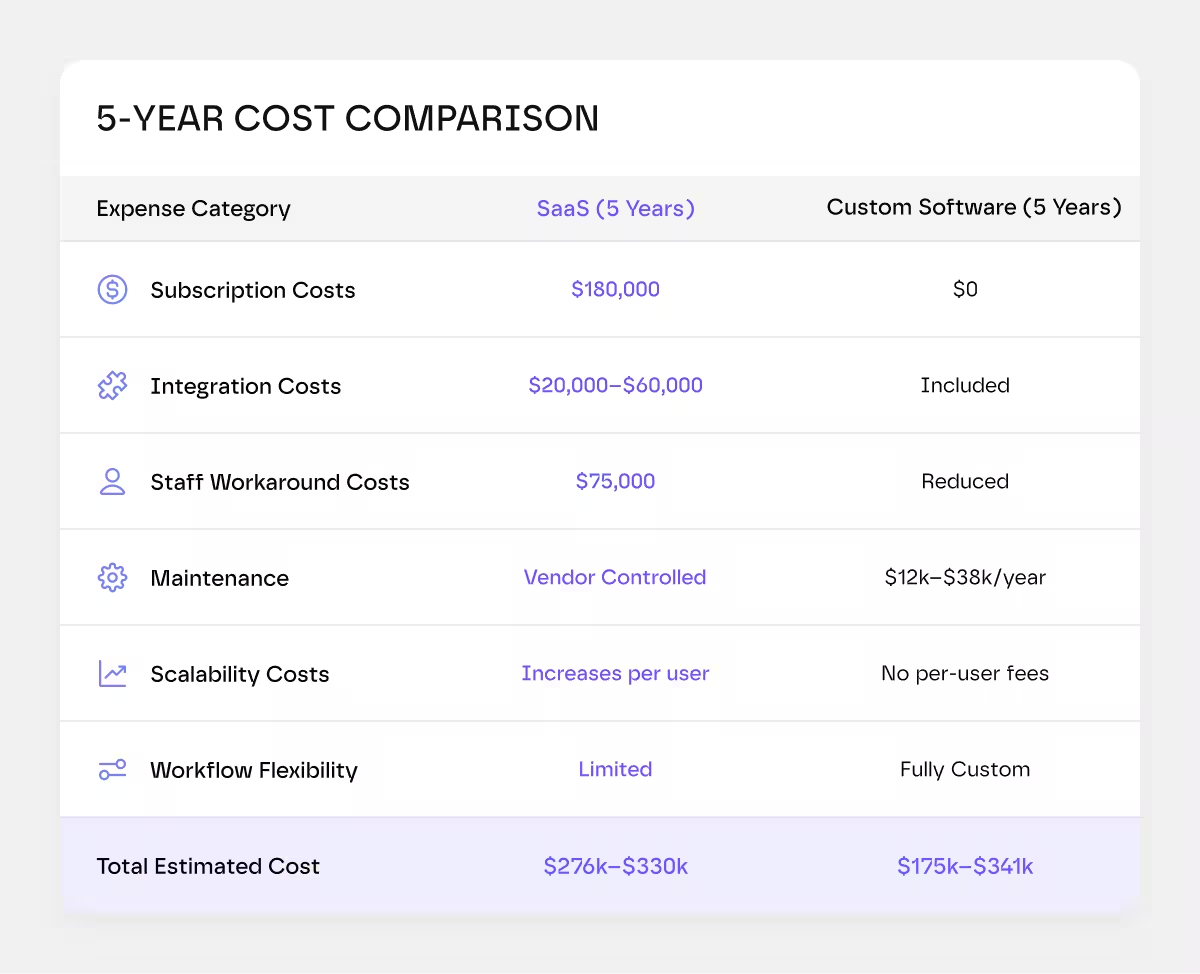
Greensighter has helped clinics compare their SaaS total cost of ownership against custom development. Most discover they're paying more to stay than to switch, and losing efficiency in the process. Are you one of them? Find out here!
When SaaS Still Makes Sense
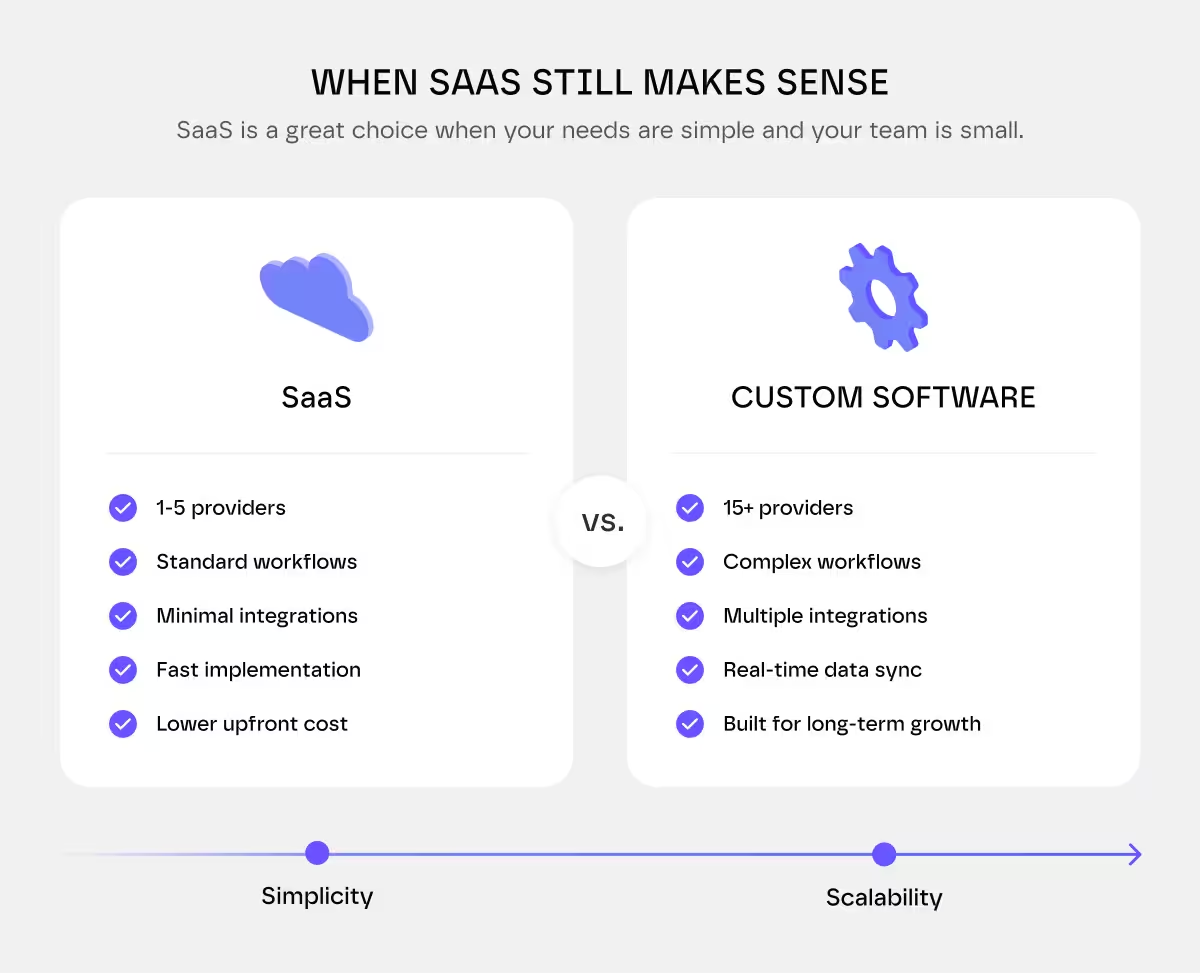
Not every clinic should switch.
SaaS works if:
You're a small, single-location practice with standard workflows. One to five providers, general practice, no complex integrations. SaaS is fast, simple, and costs less upfront.
Your needs are genuinely simple. Scheduling, basic EHR notes, and patient portal. If you don't need custom integrations or complex billing workflows, off-the-shelf is fine.
You're not staying long-term. A startup clinic testing a model before scaling. SaaS gets you to market fast without commitment.
You have IT staff to manage integrations. If you can hire a developer to build custom API connections and middleware, SaaS can work at scale. But most clinics don't have that option.
SaaS fails when:
You have more than 10 providers. Per-user costs make the tool expensive. Customization limits become painful.
Your workflows are non-standard. Specialty practices, complex billing, unusual integration needs. SaaS forces you to change how you work, not the other way around.
You need real-time data sync.
The Warning Signs You've Outgrown SaaS
Your staff has stopped asking for features. They've given up. The tool does what it does. They work around it.
Integration requests are backlogged. The vendor says "we're working on it" for months. You need it now.
Your billing cycle is longer than that of your competitors. Manual steps. Data re-entry. Delays between visit and claim submission.
Patient complaints about the portal. Scheduling is broken. Integration with your EHR means patients see outdated information.
You're comparing quotes from other SaaS vendors. And they all have the same limitations. If the problem isn't vendor-specific, it's a category problem. You've outgrown SaaS.
You're creating spreadsheets to track what the software should track. Workarounds. Band-aids. If you're managing data outside the system to make the system work, you've hit the ceiling.
Custom Development: When Software Finally Stops Fighting Your Workflows
Building custom doesn't mean rebuilding everything.
Most clinics keep their EHR (Epic, Cerner, Meditech). Custom development builds around it. Workflow tools that connect to the EHR. Patient portals that pull real data. Billing integrations that sync automatically.
According to McKinsey research on healthcare technology implementation, the total cost of custom integration projects typically includes not just development but also integration services, which can range from 1.5–2x the annual software subscription equivalent in value, a significant but quantifiable investment.
You own the code. Not licensed. Not rented. Built for your clinic.
Scaling costs nothing. Add 50 providers. No per-user fees. The system serves your clinic, not the vendor's pricing model.
Integrations work. Real API connections. Real-time sync. No CSV exports. No manual uploads.
Your workflows drive the software. Not the other way around.
But custom comes with responsibility. You need ongoing support. Updates. Security patches. A vendor who sticks around and maintains the system long-term.
That's why vendor selection matters more for custom than SaaS. With SaaS, if the vendor fails, you switch. With custom, if the vendor disappears, you're stuck with code nobody else understands.
The Decision Framework: SaaS vs. Custom
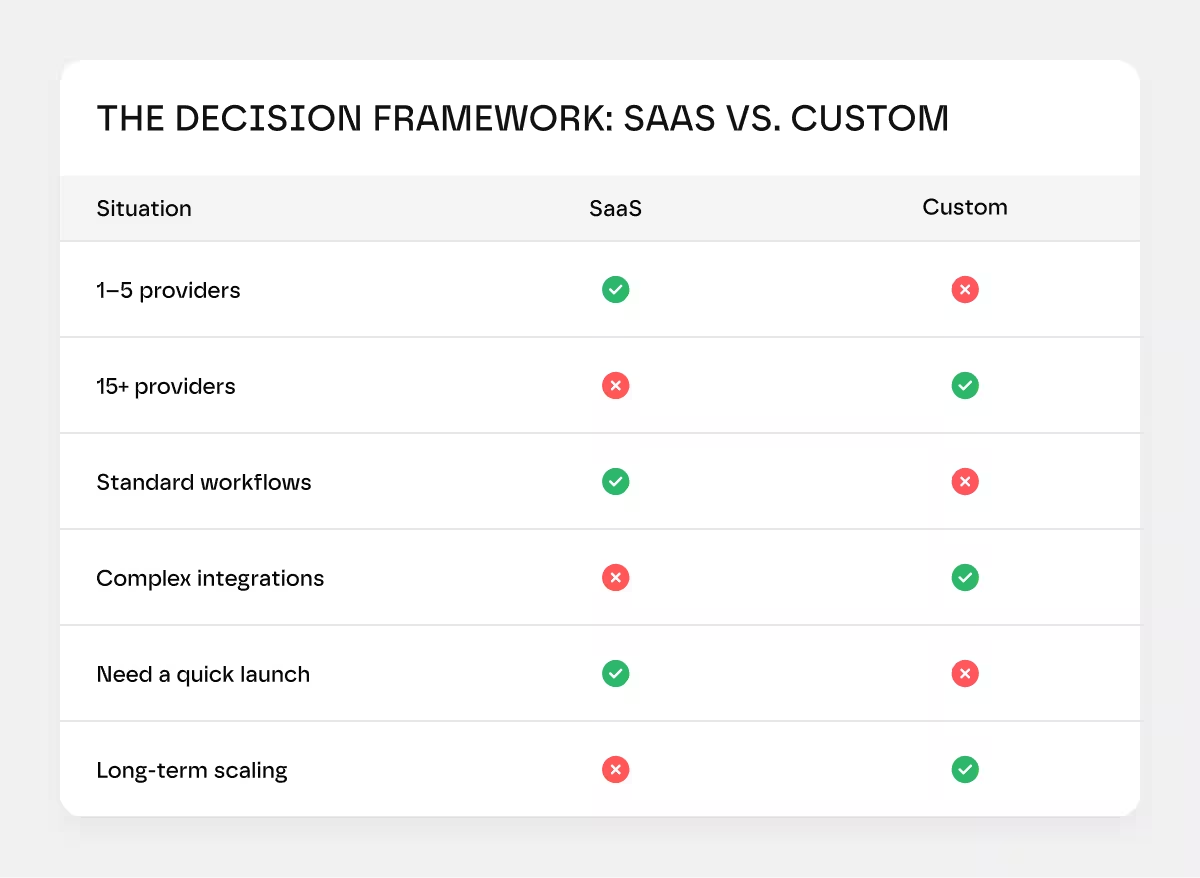
Ask yourself these questions:
- Scale: How many providers will you have in 3 years? If more than 15, custom makes sense. Per-user costs will exceed custom development costs.
- Integration needs: How many systems need to talk to each other? If more than 3, and they need real-time sync, custom is cheaper than managing multiple SaaS integrations.
- Customization: Can your workflows fit into a standard tool? Or do you need something built around your specific processes? If the latter, SaaS will frustrate you.
- Timeline: Do you need to go live in 8 weeks? SaaS. Do you have 4–6 months? Custom.
- Total cost of ownership: Calculate 5 years of SaaS costs (subscriptions + integrations + staff time). Compare it to custom development costs. If the SaaS total is 50% higher, custom wins.
- Long-term vision: Is this tool a foundation for growth? Or temporary? If you're building a platform, custom. If you're solving a short-term problem, SaaS.
Most clinics answer "more than 15 providers," "more than 3 systems," "no, our workflows are unique," and "5+ years." That's the custom signal.
The Transition: From SaaS to Custom
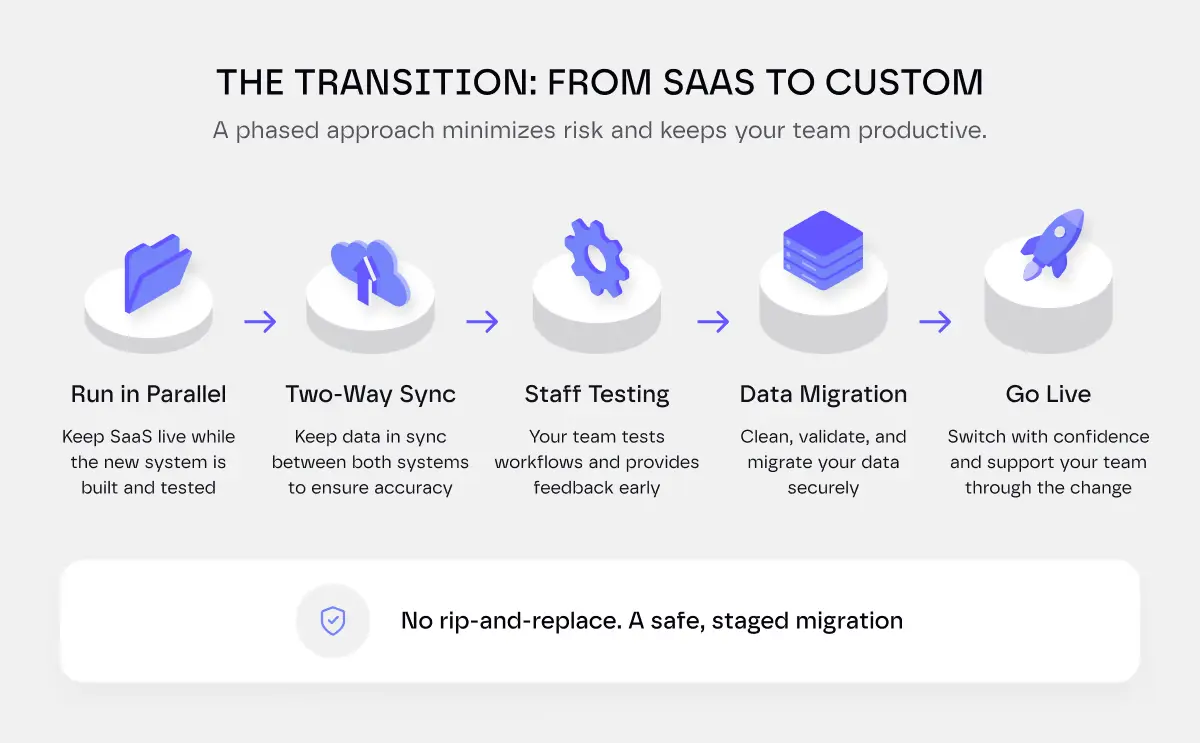
Switching doesn't mean a flag-day cutover.
Most transitions run parallel for 2–4 weeks. The custom system runs alongside the SaaS tool. Data syncs both ways. Staff tests workflows. You validate that nothing is lost.
Then cutover. The new system is live. The old system is archived (not deleted, you keep the data).
Staff training happens during the parallel period, not on day one. They're already familiar with the new workflows because they've been testing them.
Data migration is clean because you're not rushing. Fields map correctly. Duplicate records are reconciled. Nobody wakes up on Day 2 asking, "Where did my data go?"
This takes time. And planning. But it's far cleaner than rip-and-replace.
A serious custom development partner will insist on this approach. If they promise a quick switch, they're cutting corners.
The Bottom Line
SaaS works for simple, small clinics with standard needs.
But the moment you scale, specialize, or integrate across multiple systems, SaaS becomes expensive and inefficient. You're paying for features you don't use and can't get features you do.
Custom development costs more upfront. But it pays back in Year 2 and shows consistent ROI in Years 3-5.
The clinics that win are those that make this transition deliberately, with a clear calculation, and with a vendor who understands healthcare, not those who stay with SaaS too long and finally switch in a panic.
The cost of staying is always higher than the cost of switching.
Ready to move from SaaS constraints to custom flexibility? Greensighter builds modular custom solutions that layer on top of your existing systems like Epic, Cerner, and Meditech. No rip-and-replace. No vendor lockdown. We create workflow wrappers, custom portals, and automation layers that integrate seamlessly with what you already have. Your EHR stays. Your data stays. Only the constraints disappear.


.webp)
.webp)