



HIPAA compliance isn't optional. It's just part of running a healthcare clinic.
Here's the thing most clinics don't realize: A data breach costs an average of $7.42 million.
That's not just a fine.
That's your clinic's reputation, patient trust, and possibly your doors closing.
Most clinics think compliance is just paperwork and legal forms.
But it's way more than that.
It's built into your software security, your backups, training your staff, checking for problems,
and handling breaches.
You can't skip it.
But you should understand where your money is actually going and why it matters.
What HIPAA Actually Requires (And Why It Costs)
HIPAA has three pillars: Privacy Rule, Security Rule, and Breach Notification Rule.
- Privacy Rule: Governs how patient data is used and disclosed. Requires written policies, patient consent forms, and access controls.
- Security Rule: Requires specific technical protections. Encryption at rest and in transit. Access logging. Audit trails. Regular risk assessments.
- Breach Notification Rule: If patient data is exposed, you must notify affected individuals within 60 days and report to HHS.
None of these is optional. None of these is cheap.
But the costs vary dramatically based on how you build and what you choose.
Breaking Down HIPAA Compliance Costs
HIPAA compliance costs fall into five major categories:
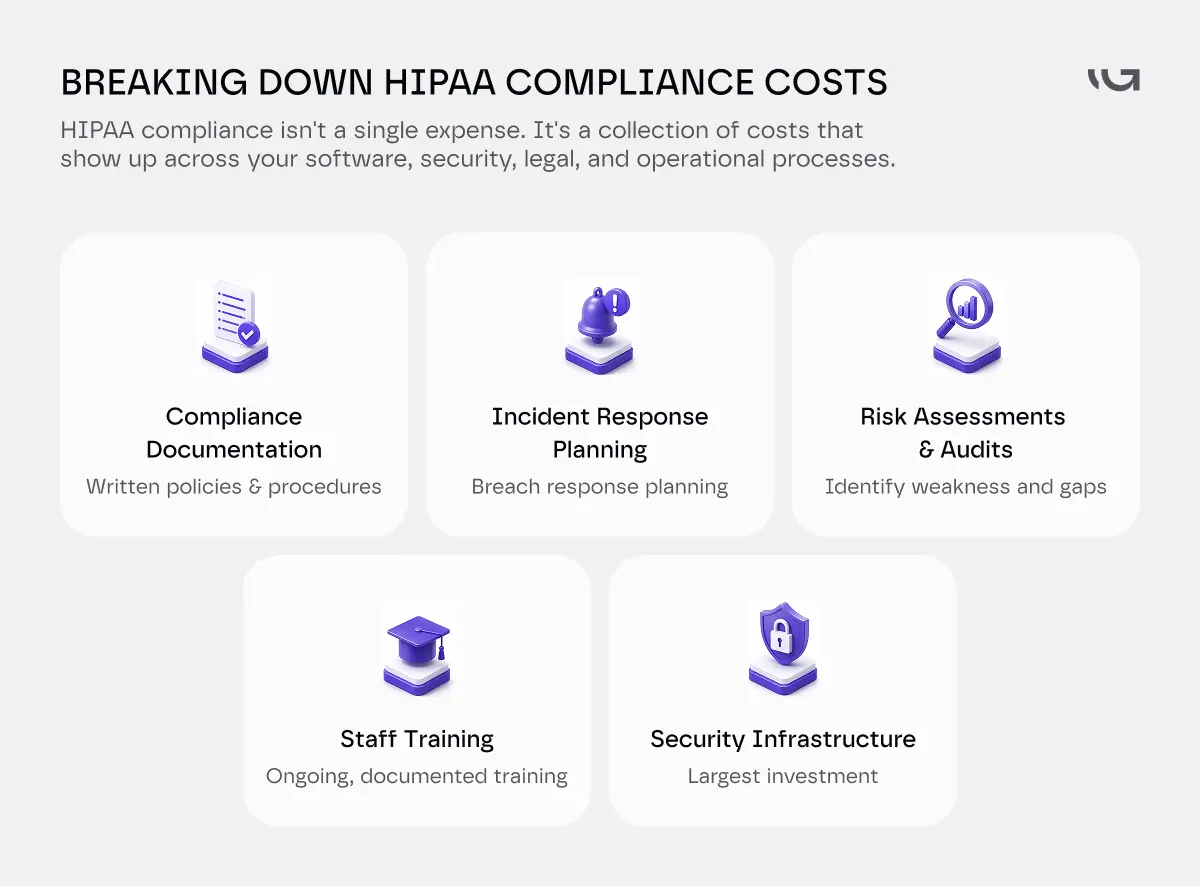
1. Security Infrastructure
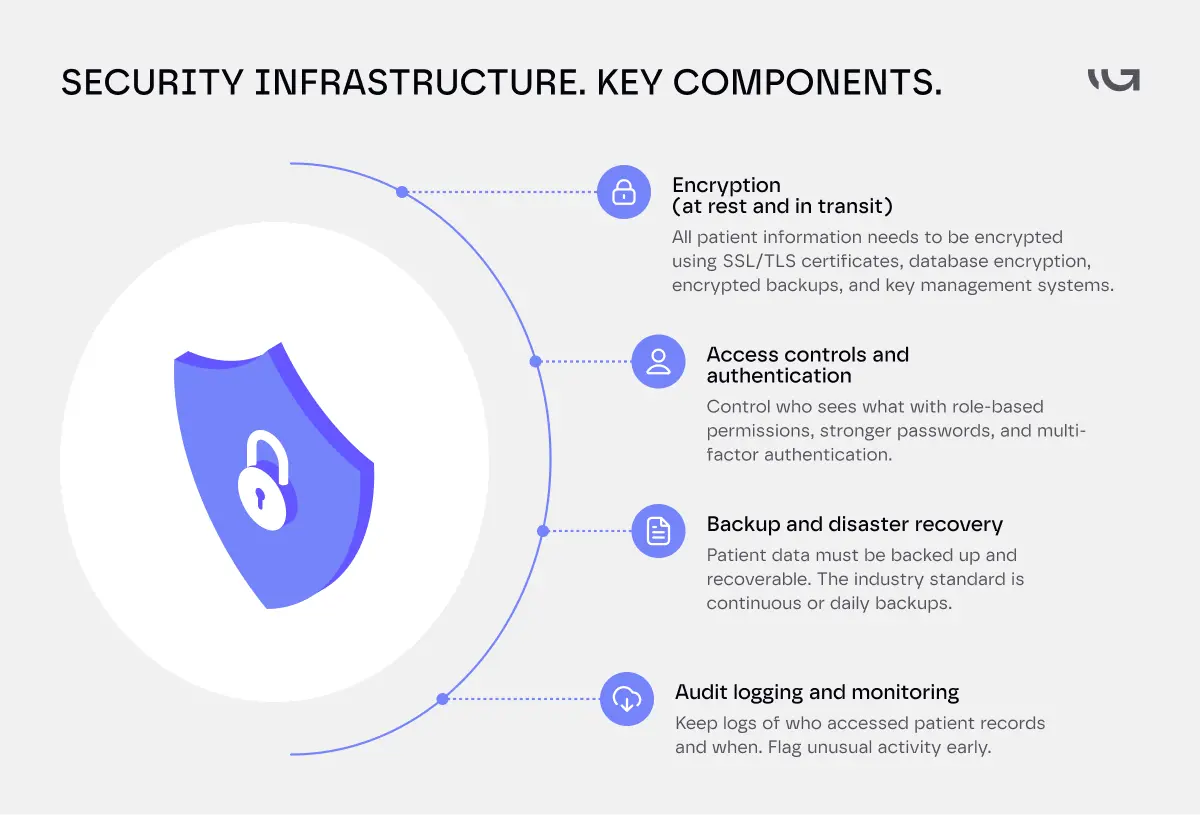
This is typically the largest investment. Security infrastructure includes:
- Encryption (at rest and in transit):
All patient information needs to be encrypted.
This requires SSL/TLS certificates, database encryption, encrypted backups, and key management systems.
- Access controls and authentication:
Think about your front desk team.
They don't need access to the same information as a physician.
And a billing specialist doesn't need access to everything either.
HIPAA expects you to control who sees what.
That usually means adding role-based permissions, stronger passwords, and multi-factor authentication.
None of those tools is particularly expensive on their own. But together they become another line item in your compliance budget.
- Audit logging and monitoring:
Every time someone opens a patient record, HIPAA expects you to know who accessed it and when.
That means keeping logs.
Lots of them.
Not for a few weeks. Often for years.
You also need systems that flag unusual activity before it becomes a problem.
- Backup and disaster recovery:
Patient data must be backed up and recoverable. The industry standard is continuous or daily backups.
The cost and complexity of security infrastructure depend on:
- Current system architecture
- Data volume and complexity
- Number of locations
- Integration requirements
Is your current system compliance-ready?
Schedule Your Security Assessment and find out!
2. Legal & Compliance Documentation
HIPAA requires written policies and procedures. This isn't a nice-to-have. It's a defense mechanism if there's ever a breach or audit.
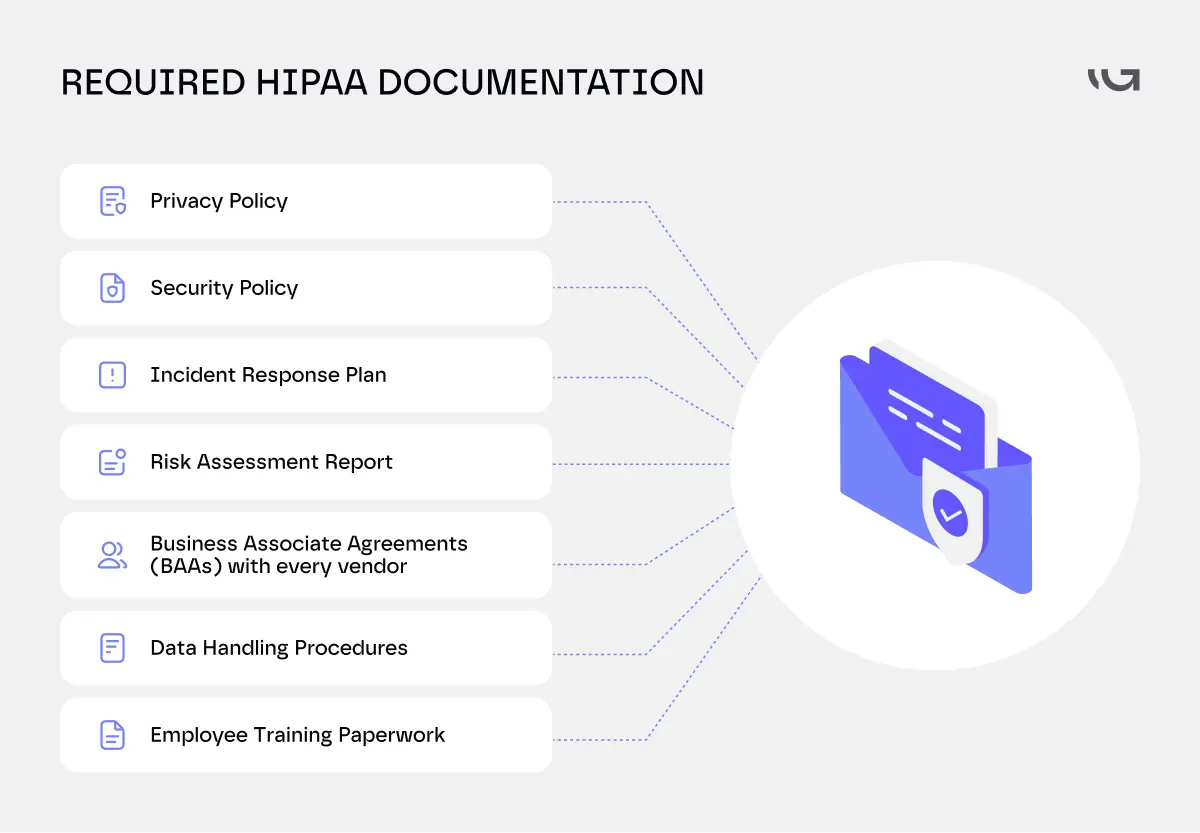
Required documents include:
- Privacy Policy
- Security Policy
- Incident Response Plan
- Risk Assessment Report
- Business Associate Agreements (BAAs) with every vendor
- Data Handling Procedures
- Employee Training Paperwork
Most clinics work with a healthcare attorney to draft these. Legal costs are one-time for initial documentation, then ongoing for annual updates and new BAAs as you add vendors.
3. Compliance Audits & Risk Assessments
HIPAA requires you to conduct a risk assessment of all systems that access or store patient data. This identifies weakness and gaps.
Annual risk assessments are industry best practice (required if you want good cyber insurance).
Third-party compliance audits are recommended every 2–3 years and required by many cyber insurance policies.
4. Staff Training & Onboarding
Every staff member who touches patient data must be trained on HIPAA. Not a one-time training. Ongoing, documented training.
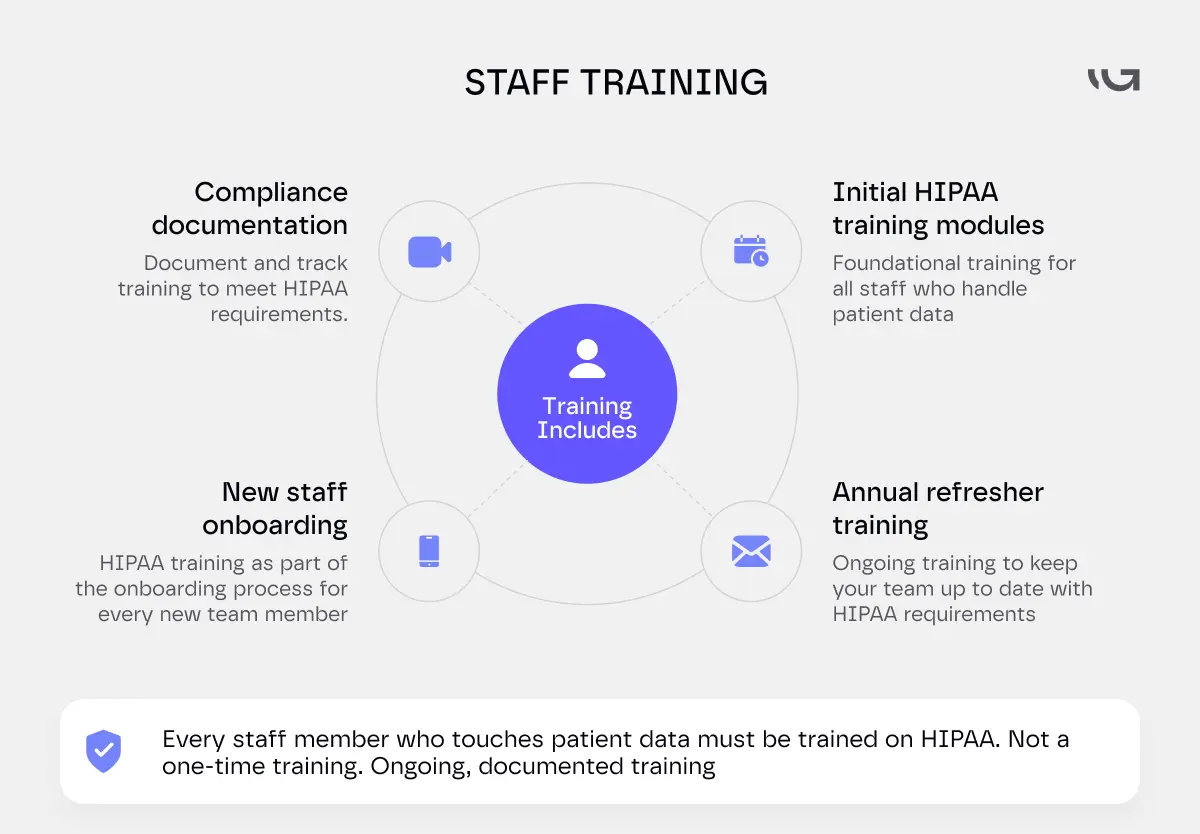
Training includes:
- Initial HIPAA training modules
- Annual refresher training
- New staff onboarding
- Compliance documentation and tracking
Costs vary based on:
- Number of staff
- Whether you use training vendors or develop internally
- Staff turnover
- Compliance tracking software
5. Incident Response & Breach Notification
If a breach happens, you must:
- Investigate what happened
- Notify affected individuals
- Report to HHS
- Work with legal counsel
- Potentially pay for credit monitoring for affected patients
Most clinics don't budget for this until it happens. By then, it's too late.
Cyber insurance (highly recommended): Covers breach notification costs, investigation, and legal fees.
Cost of Small vs. Mid-Size vs. Enterprise
According to HIPAA Journal, mid-range HIPAA compliance estimates for healthcare organizations often fall between $80,000 and $120,000.
So, the costs scale with organization size:
Small Practice (1–5 providers, single location):
- Lower difficulty, fewer endpoints, smaller staff
- Simpler documentation and audit requirements
- Lower annual monitoring costs
- Typical annual spend: Lower end of the range
Mid-Size Clinic (15 providers, multiple locations):
- More complex systems and data flows
- Larger staff requiring training
- More vendors requiring BAAs
- A formal compliance program is recommended
- Typical annual spend: Mid-range
Enterprise (40+ providers, multi-state):
- Complex infrastructure across multiple systems
- Large staff with high turnover
- Many vendors and third-party integrations
- A dedicated compliance officer is often needed
- Annual audits and penetration testing required
- Typical annual spend: Highest
Unclear what HIPAA compliance actually costs your clinic?
Most practices underestimate compliance expenses until deep into development. We help clinics understand the real cost picture before you commit to a build or platform.
The Hidden Costs Nobody Budgets For
Once you choose a SaaS platform, you're committed. Why? Because switching means new Business Associate Agreements with a new vendor.
Our legal and compliance teams may also need to review security policies, update documentation, and verify how patient data is handled.
And if your system connects with multiple vendors, that work grows fast.
This is why vendor selection matters.
You're not just choosing software. You're choosing long-term compliance partners.
HIPAA-compliant hosting costs more
Standard cloud hosting (AWS, Azure) is cheaper than HIPAA-compliant hosting. Why? HIPAA-compliant hosting requires:
- Encrypted data at rest
- Encrypted data in transit
- Audit logging
- Business Associate Agreement with the hosting provider
- Regular compliance certifications
Data breach costs (even with insurance)
According to IBM’s 2025 Cost of a Data Breach Report, healthcare remained the costliest industry for data breaches, with the average breach costing $7.42 million.
The report includes costs related to investigation, downtime, notification, recovery efforts, regulaatory response, and lost business.
Your cyber insurance covers notification costs and investigation. But you still pay:
- Operational downtime during investigations
- Staff time spent on incident response and recovery
- Legal and compliance expenses
- Regulatory penalties in serious cases
- Loss of patient trust and referrals
HHS can impose significant civil monetary penalties for HIPAA violations depending on the severity and level of negligence involved.
Most clinics are underinsured for compliance risks. Greensighter help practices understand their exposure and recommend preventive measures that cost less than one breach notification. Is your clinic one breach away from financial disaster? Assess your breach risk with us.
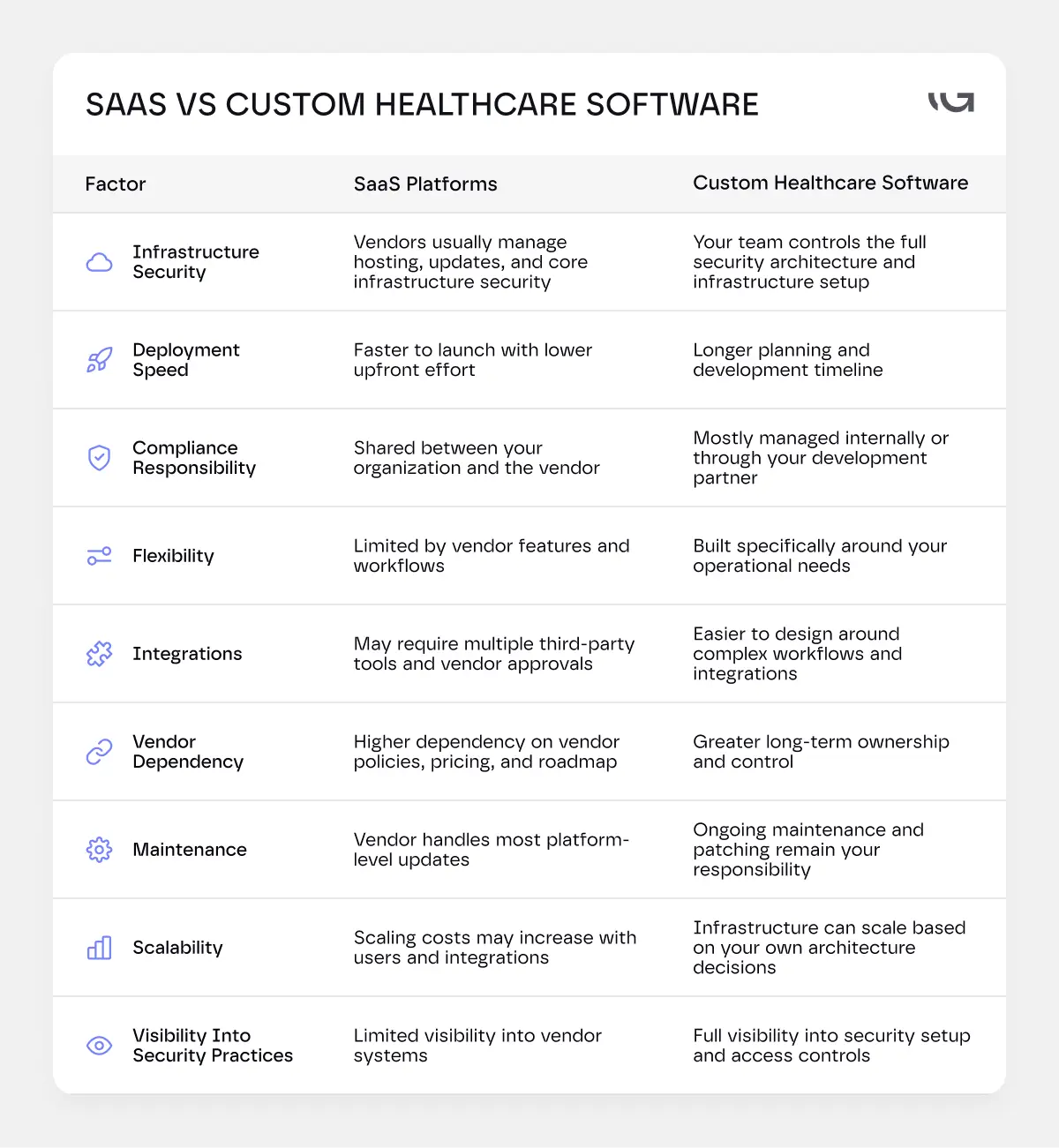
Custom vs. SaaS: Which Is More Compliant?
The reality: Neither is cheaper. They're just expensive in different ways.
A SaaS platform outsources infrastructure security but adds BAA complexity and per-user costs.
Custom software requires upfront compliance investment but removes vendor dependencies.
Most clinics choose custom when they have 15+ providers and need multi-system integration. The compliance investment becomes worthwhile because you're building once and scaling without per-user fees.
The HIPAA Compliance Decision Framework
Ask yourself:
Is compliance built into your current system?
If you're using legacy software that predates HIPAA compliance awareness, retrofitting costs more than building new.
How many vendors do you use?
Each vendor needs a BAA. Consolidation (fewer vendors) reduces compliance complexity.
What's your risk profile?
A clinic with 50 employees in 10 locations has a higher risk than a solo practice. Higher risk = higher compliance budgets.
Do you have cyber insurance?
If not, budget for it. If yes, make sure your coverage is adequate for a breach (many small clinic policies have low limits).
Is HIPAA compliance part of your vendor evaluation?
Before choosing SaaS or custom, verify that compliance is designed in, not bolted on.
Ready to build HIPAA compliance into your system from the start?
Greensighter builds healthcare software with compliance designed in, not added later. We handle the security setup, audit logging, encryption, and BAA requirements so you can focus on patient care. HIPAA-compliant systems cost more upfront but prevent the million-dollar mistakes. Start Your Compliant Build
The Bottom Line
HIPAA compliance creates real operational costs for healthcare organizations.
These aren't optional. They're the price of operating a healthcare practice.
But here's the good news: clinics that invest in compliance early avoid catastrophic breach costs later. One prevented breach pays for years of compliance infrastructure.
The question isn't whether you can afford compliance. It's whether you can afford to ignore it.